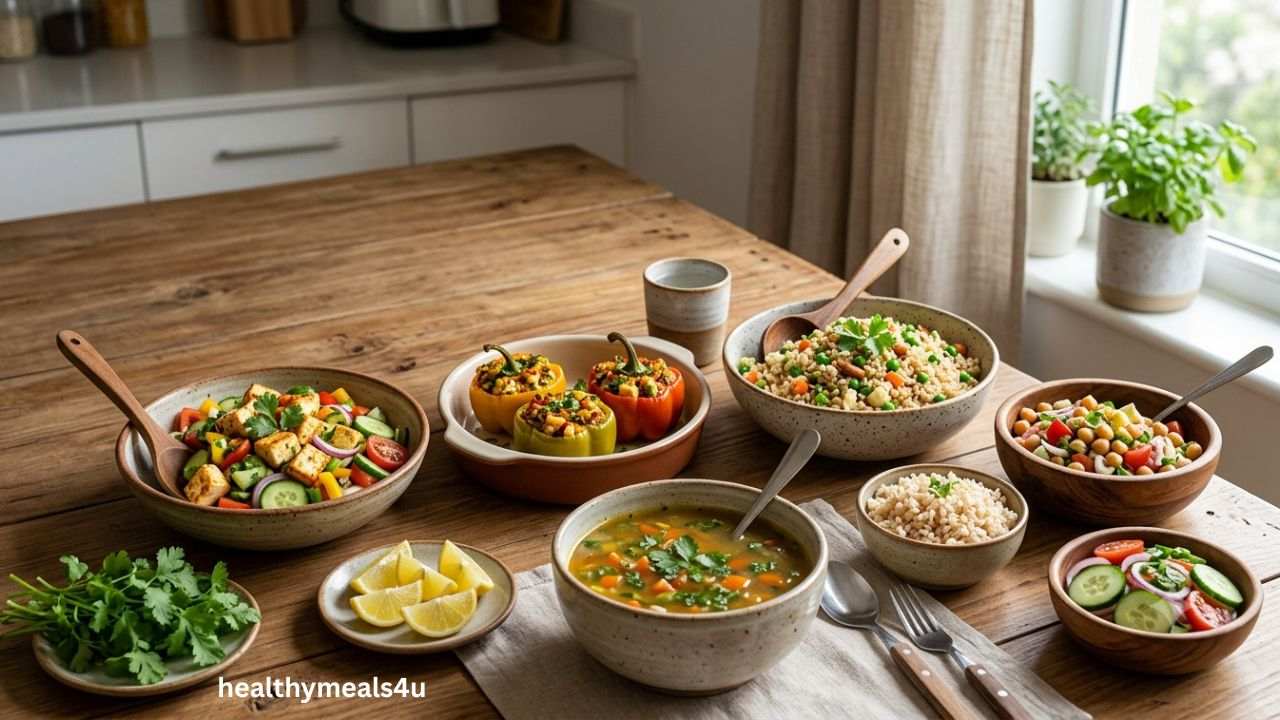
My mom used to think breakfast was the meal that mattered most for blood sugar. We were wrong. It took her a few months of tracking – and one particularly stubborn fasting reading of 118 mg/dL that refused to budge no matter what she ate in the morning – before she finally turned my attention to dinner.
That’s when things started to shift.
The evening meal has more power over your overnight glucose than most people give it credit for. And if you’re managing diabetes in an Indian household, where dinner often means a generous heap of white rice, rotis slicked with ghee, and maybe a small bowl of kheer to round things off – getting dinner right really is the thing that changes your mornings.
The good news is thatoff,don’t have to give up the food you love. You just have to understand what it’s doing to your body while you sleep.
We’ve already covered Indian breakfast for diabetics and Indian diabetic recipes for lunch. This guide is entirely about dinner — what to eat and what to quietly retire to from your evening plate. I’ve actually cooked and adjusted these five recipes in my own kitchen for my mom. Try out these simple meal combinations.
Why Dinner Affects Overnight Blood Sugar Differently?
Here’s the part most people don’t realise. Your body’s insulin sensitivity naturally drops in the evening. This isn’t an issue; rather, your circadian rhythm is instructing your body to decrease activity and begin preparing for sleep. As a result, glucose will stay in your bloodstream longer when you consume rice (9 p.m.) than at lunch (1 p.m.).
Then add the Indian dinner timing problem. Most of us eat between 8 and 10 pm. By the time dinner is done and digested and your body has attempted to clear it, you’re asleep — and your metabolism is running at its quietest. Whatever wasn’t cleared shows up as your fasting number by morning.
A few things that go wrong at dinnertime:
- Oversized portions: In many Indian homes, dinner tends to be the largest meal of the day, as the majority of people either skip lunch or eat it quickly. Consequently, they will compensate for skipping or rushing during the daytime with their evening meal; however, it is not a good thing to eat your largest (and often heaviest) meal of the day at night.
- High-GI carbohydrates: White rice, maida-based rotis, white bread — all of them digest fast, hit the bloodstream quickly, and leave you with a spike that has all night to linger.
- Skipping protein: This one quietly undoes a lot of otherwise decent dinners. Protein is a must for every meal, especially with carbs. It will slow down its absorption.
- Sweet endings: A small bowl of kheer or two gulab jamuns seems harmless. It isn’t, not at this hour. I spent weeks wondering why my mom’s 2-hour post-dinner reading was consistently high before I finally tracked it back to the jaggery-sweetened halwa she was having “just a little bit” of.
We have already gone through the major principles for managing what you eat in the food for diabetes patient in India. Here we are applying those principles to dinner.
Quick check: If your fasting blood sugar has been creeping above 100 mg/dL most mornings, the single most impactful change you can make is probably to your dinner. Not your breakfast. Dinner.
What to Eat at Night for Dinner?
Best Grains for Dinner
Grains are the heart of most Indian dinners. I’m not going to tell you to stop eating them — that’s neither realistic nor necessary. What matters is which grains you’re choosing and how much.
Grain | GI (approx.) | Benefits |
Foxtail millet (kangni) | 50–54 | High in fibre, slow-digesting, supports insulin sensitivity |
Bajra (pearl millet) | 54 | Rich in magnesium; helps regulate blood sugar |
Broken wheat (dalia) | 41–45 | High fibre, keeps you full longer |
Oats (rolled) | 55 | Beta-glucan fibre slows glucose absorption |
Jowar (sorghum) | 49–62 | Free of gluten and best for gut health. |
Brown rice (small portion) | 50–55 | Better than white rice; limit to ½ cup cooked |
Fibre-rich grains like these work the way dietary fibre generally helps manage blood sugar — it slows how fast sugar hits your bloodstream after a meal.
A practical note on millets: I was sceptical at first. Millet felt like a compromise — something you eat because you have to, not because you want to. After replacing my usual evening rice with foxtail millet khichdi for a period of three consecutive nights and recording the fasting glucose level I would have if I consumed equivalent amounts of white rice (e.g., “foo on a lily pad”), the average glucose level was reduced by approximately 11 mg/dL across the three days of these comparisons, which does not sound like much, but considering the results are consistent with other studies, this is why I have continued to use millet.
By experimenting with multiple methods of preparing foxtail millet, I found that when I dry-roasted the millet before cooking it for two minutes, the taste was much different from its whole (raw) state. This brings out its natural sweetness, creates a nutty texture, and improves the flavour of the dish.
White rice isn’t banished forever. But half a cup of cooked brown rice alongside a protein-rich dal and a vegetable is a completely different meal than a large mound of white rice with just a pickle on the side.
Portion Control: The Plate Method That Actually Works
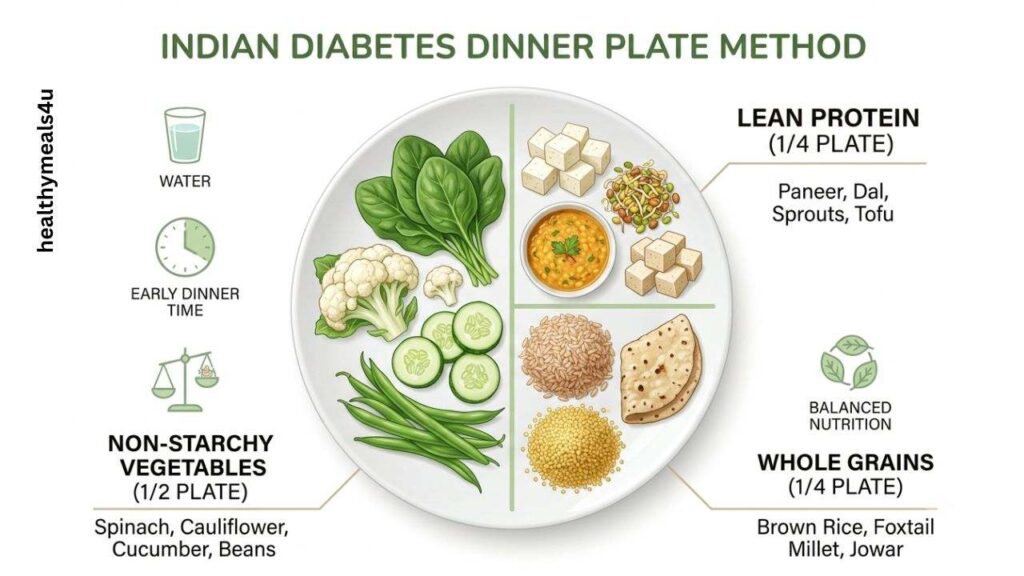
I resisted plate methods for years. They felt fiddly and clinical. But once I stopped counting grams and started thinking in plate proportions — essentially the American Diabetes Association’s Diabetes Plate Method — dinner got a lot simpler. Here’s the approach — adapted for Indian meals:
Plate Section | Recommended Foods |
Non-starchy Vegetables (½ Plate) | Spinach sabzi, cauliflower, cucumber salad, mixed greens |
Lean Protein (¼ Plate) | Dal, paneer, sprouts, eggs |
Whole Grains or Millets (¼ Plate) | Brown rice, dalia (broken wheat), bajra (pearl millet) |
Key rules:
- Fill half your plate with vegetables before you add anything else. This isn’t optional — it’s the rule that makes everything else work.
- Grains go in last, not first. The grain portion should be roughly the size of your closed fist. Not a heaped fist. A closed one.
- Eat slowly. It genuinely takes about 20 minutes for your brain to register that you’re full. This is not motivational advice — it’s biology.
- No second helpings of rice or roti. I know. It’s hard. Do it anyway.
- Avoid distractions like phones or TV to avoid overeating. I’ve personally done this many times.
- Keeping track of carbohydrate intake at dinner is simple if you have type 2 diabetes; a general range for most individuals with this condition would be 45-60 g of total carbohydrates, but work with your physician/treating dietitian to determine a value that works best for each individual. A single medium-size roti has approximately 15 g of carbs, whereas half a cup of cooked brown rice contains approximately 22 g. Thus, combining roti & rice will provide you with sufficient carbohydrates (within sensible limits) when adding protein as well.
What are the protein-rich dinner choices for diabetics?
If you are consuming plenty of vegetables and still have elevated glucose levels in the morning, then ask yourself, “Where is my protein? ” Its consumption will slow down how quickly carbohydrates are digested in comparison when no protein is consumed (i.e., flattening out post-meal ups and downs), therefore preventing midnight cravings and snacking impulses.
The best protein options for an Indian diabetic dinner:
- Paneer is a source of protein that has low carbohydrate content, along with a high amount of casein protein (which digests slowly). It can be grilled, stuffed into another food item, or placed cold on top of salad. Through my experience, grilling paneer until its edges become golden (and no longer just warm) makes paneer taste good instead of rubbery – this is especially important when you eat paneer frequently.
- Chickpeas (referred to as “chana”) are fibre- and protein-rich. Chickpeas have a low glycaemic index (GI) because they provide you with good amounts (15 g per 1 cup of boiling chickpeas) of protein while having a GI of approx. 28. Keep a batch boiled in the fridge, and half your dinner decisions become easier.
- Sprouted Moong – I began sprouting my own moong at home last year, and it takes approximately 2 days with minimal work involved to do so. Sprouted moong has significantly lower starches and allows for better absorption of nutrients than its cooked counterpart. You can incorporate it into your salads (raw) or lightly sauté (stir fry) with a little ground cumin.
- Lentils (masoor, toor dal) – A bowl of dal at dinnertime can be one of the most balanced and underrated foods to help control blood sugar levels. It isn’t just bland; it’s because most people don’t pay much attention to it since they consider the meal too commonplace. Dal that has been seasoned properly and served alongside a small portion of brown rice and a sabzi will give you a truly complete and very satisfying meal.
- Eggs – 2 boiled or poached eggs contain approximately 12 g of protein and very few carbohydrates. I’m a fan of the boiled egg over anything fried — less oil, less guilt, and it holds up well if you prep it in advance.
- Tofu — Plant-based, high in calcium, low GI. I was late to tofu, but it absorbs spices well and works beautifully in soups and stir-fries. The trick is to press it properly and dry-fry it before adding it to anything — soggy tofu is a different food entirely.
Dinner Menu Suggestions – What not to include.
Some foods are particularly problematic at dinner — not because they’re always terrible, but because of the long overnight window that follows. You won’t be moving. You won’t be burning anything off. What you ate at 8 pm is with you until morning. Avoid or eliminate these as much as possible.
- Deep-fried foods, also known as junk food, include pakoras, pooris, bhajias, and samosas. I love them too. They’re just not dinner food if you’re managing diabetes — the refined flour and fat combination is a blood sugar problem wrapped in nostalgia. Save them for the occasional treats.
- Desserts like kheer, gulab jamun, rasmalai, and halwa. A very small amount of dark chocolate made from 70% cocoa or more will not hurt as much as a small portion/serving of kheer. Although I can’t say eating dark chocolate is the same as eating kheer. But your fasting reading the next morning will be noticeable.
- Refined flour (maida) foods. Naan, white bread, and maida-based paratha. These digest almost as fast as sugar. They offer nothing your body can use slowly.
- Large portions of white rice. Not a ban — a portion limit. I’ve noticed a consistent pattern in my own readings: the larger the portion of white rice at dinner, the higher the fasting number the next morning. Every time. The rice isn’t the enemy. The quantity is.
- Sweetened drinks with dinner. This is the one that catches people off guard — the chai with two spoons of sugar, the “small” glass of mango juice. Liquid carbohydrates absorb faster than solid ones because there’s no fibre to slow them. A sweetened drink with dinner is glucose delivered express.
Indian Diabetic Recipes for Dinner
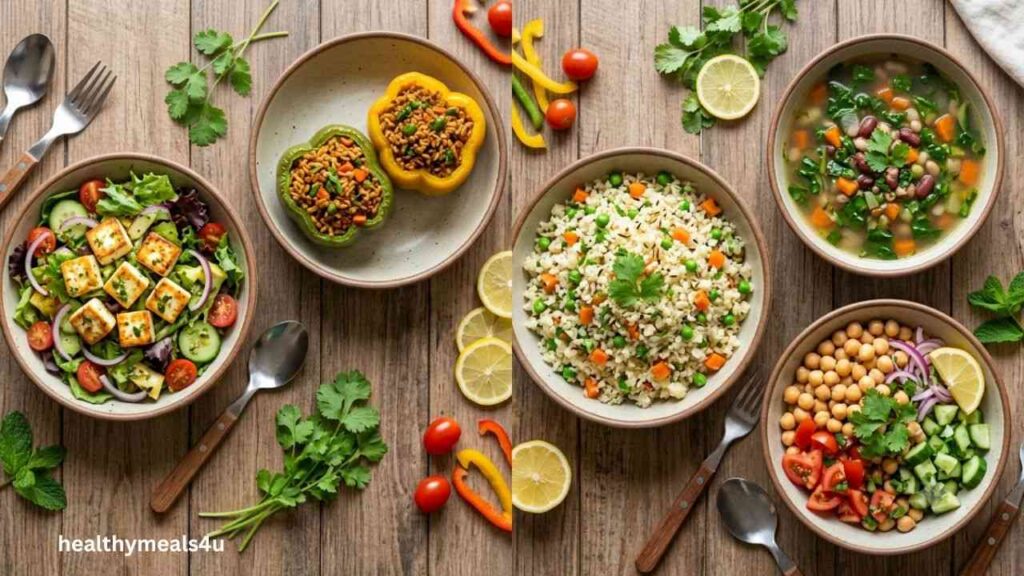
These five recipes have been cooked, tested, adjusted, and eaten at my actual dinner table. I’ve listed what I got wrong the first time alongside what to do instead — because a recipe that only tells you what to do when it goes right isn’t all that useful.
Sample Dinner Combinations for Better Blood Sugar Control
Not every night needs a recipe from scratch. These four combinations use the recipes above alongside common pantry staples to put together a balanced plate without overthinking it.
Light Dinner Option
Diabetic Vegetable Soup + Paneer Salad Bowl – Evenings are optimal if lunch is heavier than anticipated or if you simply aren’t very hungry. The soup will help heat you up as well as keep you full; the paneer salad will offer you sustained protein without too many carbs. The total amount of carbohydrates that you would consume in this meal should be around 20-22 gm.
High-Protein Dinner
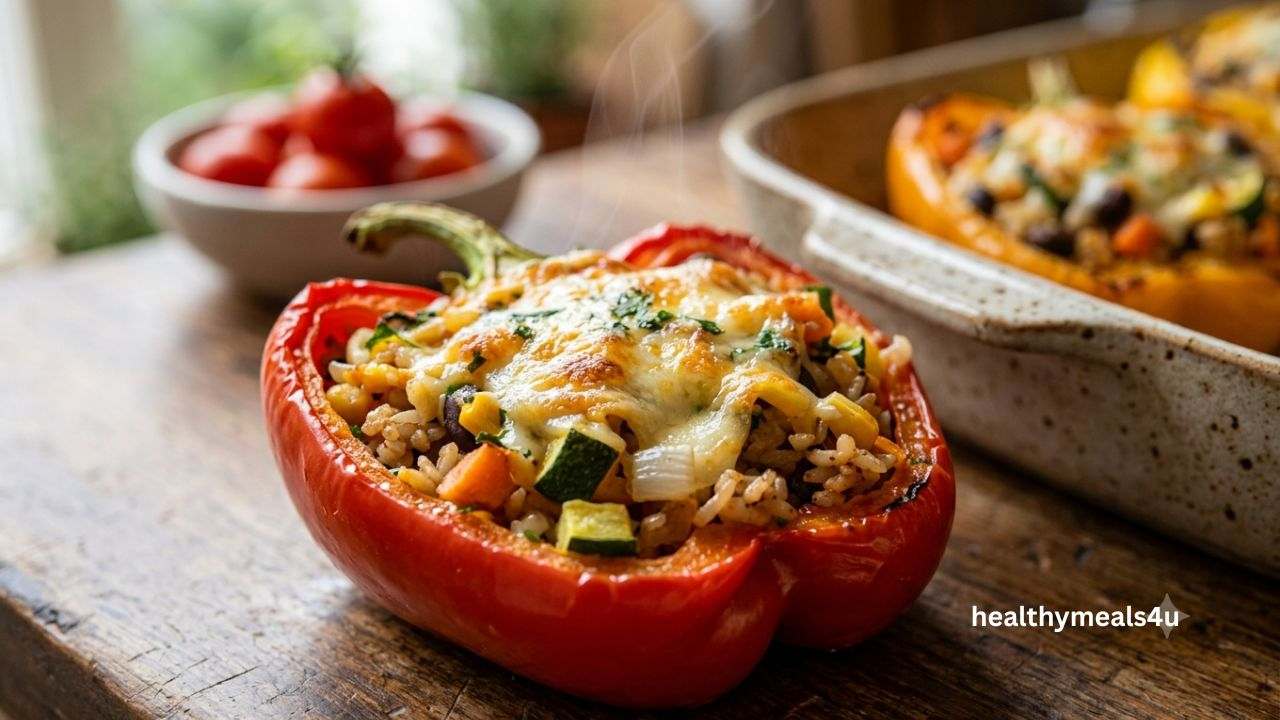
Stuffed Capsicum & Chickpea Salad – This is the combination for days when you’ve been active or when you know tomorrow is going to be a long one and you need to feel actually fed. Total protein (both dishes) is approximately 23-25 g. Since capsicum is very low in carbs, the meal is moderate in carbs.
Low-Carb Dinner
Cauliflower Pulao & Vegetable Raita – Raita is made with low-fat curd, grated cucumber and a touch of cumin and offers one of the best ‘hidden’ benefits to diabetics during dinnertime. Recent studies have proven that good bacteria contained in curds may help the body become more sensitive to insulin. This combination comes to approximately 18–20 g total carbs – genuinely low for a dinner that still feels like dinner.
Vegetarian Dinner
Chickpea Salad & Diabetic Vegetable Soup – A fully plant-based dinner that holds up. The chickpeas carry the protein and fibre; the soup fills the gaps. If you want more, you could consider adding a small jowar roti to this meal, and you’d still be within an appropriate range.
A Short Checklist for Planning Dinner
Before you cook or before you order, run through this:
- Is at least half my plate vegetables?
- Have I included a protein source — dal, paneer, sprouts, egg, or tofu?
- Is my grain a whole grain or millet rather than refined flour or white rice?
- Am I eating before 8 pm, ideally?
- Am I avoiding deep-fried or sugary foods tonight?
- Is my grain portion actually fist-sized – not a generous heap?
- Am I drinking water with this meal, not something sweetened?
You do not have to tick every box on the ‘Tick List’ every night; however, if you have been having difficulty with your fasting numbers, I would advise you to go through the list honestly and see which boxes have not been checked often; you may find an answer this way.
Managing dinner for diabetes in India doesn’t mean resigning yourself to boiled food and absent seasoning for the rest of your life. It means using the ingredients you already have in your kitchen to make smarter choices. Replace white rice with millet or brown rice a few nights a week. Building your plate around veggies and protein before you add grains. Eating a little earlier. Keeping portions honest with yourself.
Start with one change. Track your fasting glucose for a week. Notice what shifts.
The point isn’t perfection every single night. The point is that dinner — specifically, a better dinner — has more power over your mornings than almost anything else you can do.
This article is for informational purposes only and is not a substitute for medical advice. Make sure to check with your doctor, dietitian or diabetologist before making any major changes to your diet, especially if you are on diabetes medication or insulin.