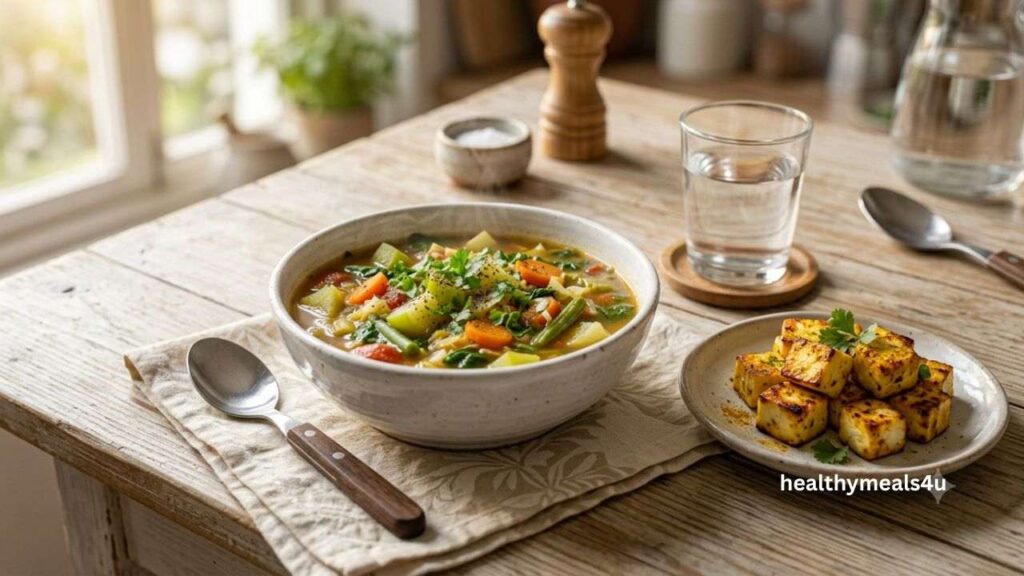
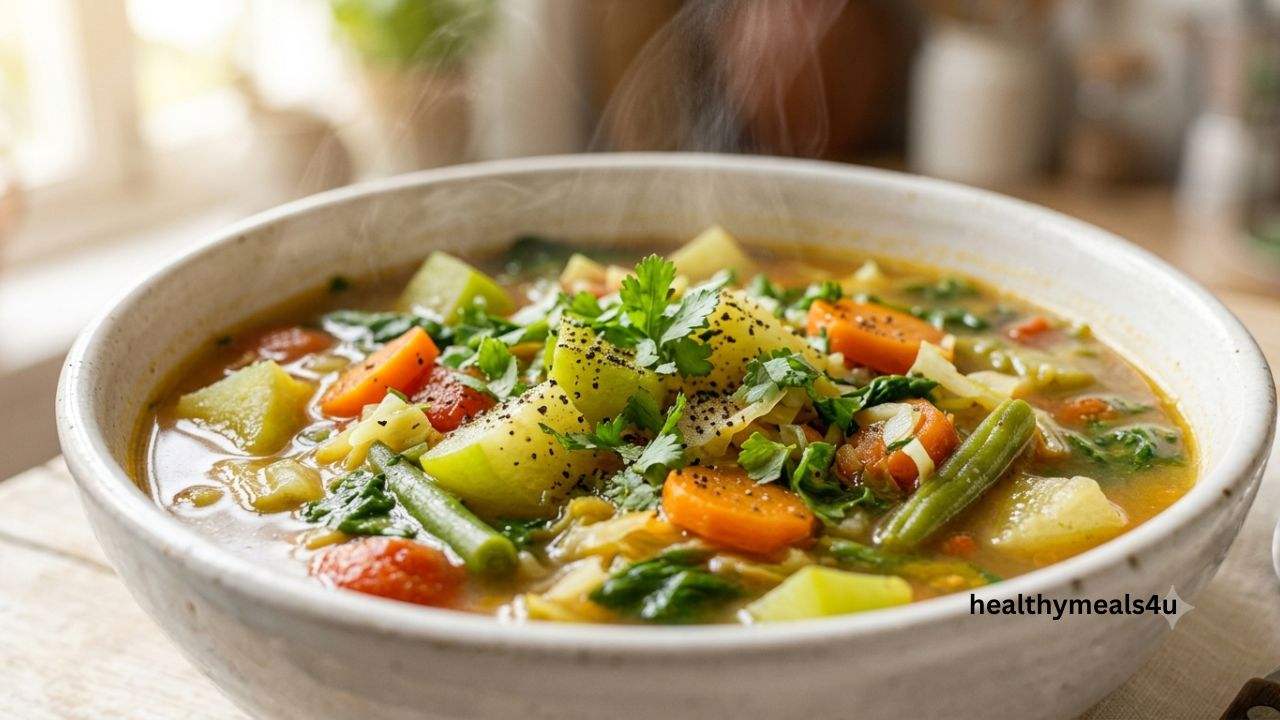
My mother used to make this diabetic vegetable soup on the days her lunch had already eaten up most of her carb budget. It’s light — doesn’t sit in your stomach like a brick — but enough is happening in the bowl, enough vegetables, and a proper temperature so that it never tastes like penance.
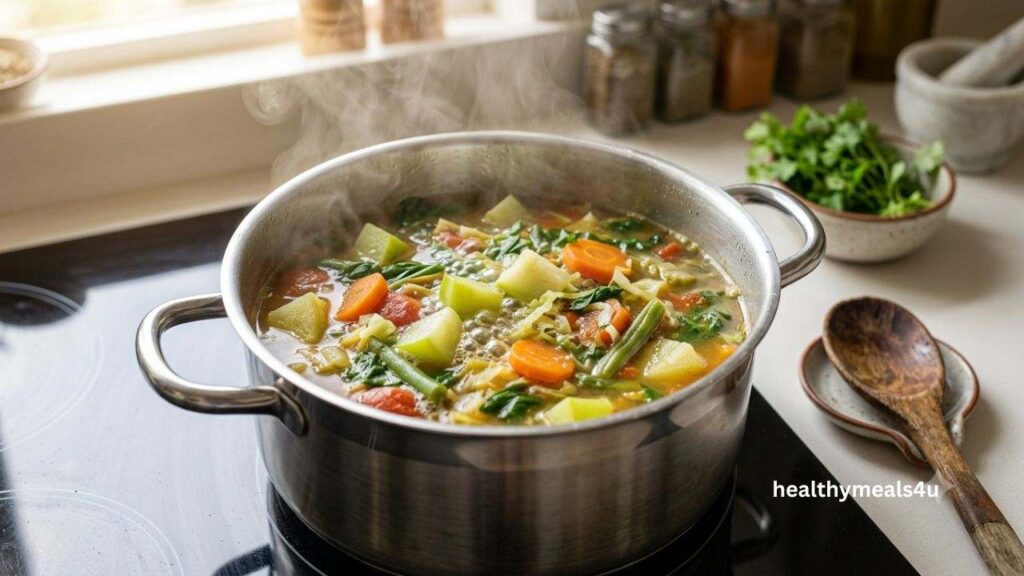
There isn’t really an “official” recipe behind the name. It’s more of a method than a dish: take non-starchy vegetables, let them simmer, and season with a real tadka instead of cream or a cornflour slurry, and you end up somewhere around 90 calories a bowl, maybe 12g of carbs, with a glycaemic load so low it barely registers. Skip the potato, skip the corn, skip the thickener — that’s really the whole trick. Thirty minutes, most of it just simmering while you do something else.
Why does diabetic vegetable soup actually help with blood sugar?
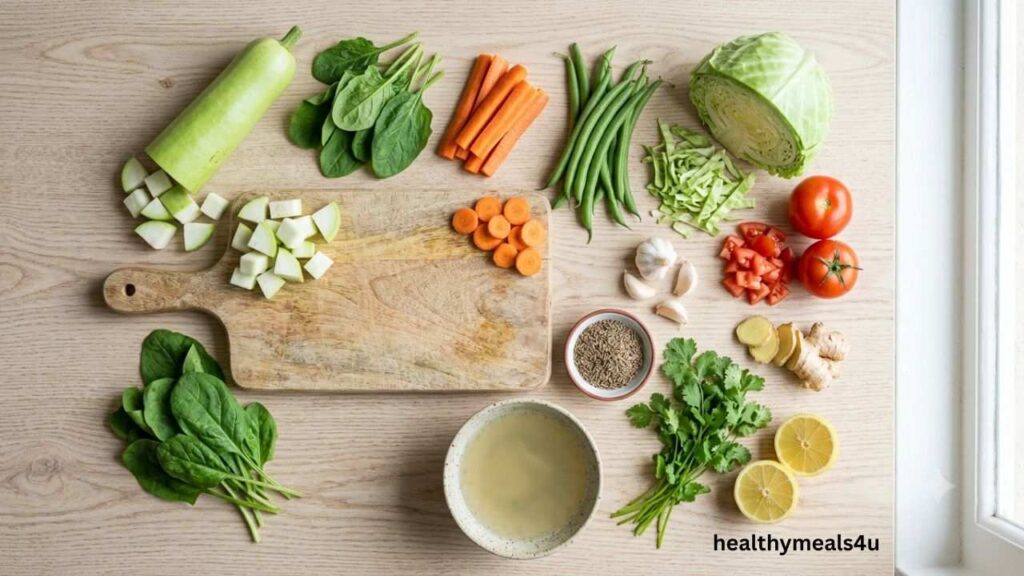
The vegetables are doing most of the heavy lifting here. Bottle gourd, spinach, beans, tomato — on their own, these all sit at a low glycaemic index, generally under 30. Carrots climb a little once they’re cooked soft and blended in, but in the quantities used here, it barely moves the needle for the bowl as a whole.
Then there’s what’s not in it. A lot of restaurant vegetable soups get their body from a cornflour-water slurry stirred in at the end — an easy trick for making a thin soup feel substantial, but it’s really just refined starch with a high GI and nothing else to offer. Here, the thickness comes from the vegetables breaking down on their own as they cook, so you’re not adding starch you don’t need.
And it’s filling without being heavy — a lot of volume for very little calorie cost. That matters more than people give it credit for. Carrying extra weight is one of the biggest drivers of how type 2 diabetes progresses, so a soup you can eat a full bowl of without much calorie cost is quietly doing more work than it looks like.
It also just digests slowly, mostly because it’s water and fibre rather than anything dense. That tends to mean a gentler rise in blood sugar afterwards, compared to something dry and carb-heavy at the same calorie count.
It fits the same basic logic that runs through good food for diabetes patients in India generally: whole, low-GI ingredients over refined starches, every time.
Who is it good for? Who should tweak this diabetic vegetable soup?
This diabetic vegetable soup works well if you’ve got type 2 diabetes and want something low-carb for dinner or as a starter — it’s actually one of the four combinations I put together in my Indian diabetic dinner guide if you’re managing weight alongside blood sugar, if you’re recovering from something and need food that’s easy on the stomach but still has some nutrition in it, or if lunch was heavy and you just want dinner to be lighter. It’s also just a decent way to eat more vegetables without any real carb cost.
A few groups should adjust it, though. If you’re on a potassium-restricted diet for kidney disease, go easy on the spinach and tomato — both run fairly high in potassium levels — and follow whatever your nephrologist has told you rather than general diabetic advice, since that takes priority. If you need more calories or protein than this gives you — you’re underweight, older with a smaller appetite, or recovering from illness — don’t lean on this as a full meal by itself; add a boiled egg, a side of dal, or pair it with my paneer salad bowl the way I do on nights I want something light but still filling.
On low-FODMAP, garlic and onion will cause trouble, so swap them for the green part of a spring onion or a pinch of hing, and you’ll still get flavour without the issue. And if you’re on blood pressure medication, watch the salt — restaurant soups tend to run saltier than they need to, but you control that entirely when you make it at home.
Nutrition, per bowl in diabetic vegetable soup
| | This soup | Typical restaurant version |
Calories | ~90 kcal | ~160 kcal |
Total carbs | ~12g | ~22g |
Fiber | ~3.5g | ~1.5g |
Net carbs | ~8.5g | ~20.5g |
Protein | ~3g | ~2.5g |
Fat | ~2.5g | ~7g |
Glycemic load | Low (~3–4) | Moderate (~10–12) |
Serves 4; makes about 6 cups total. Take the restaurant numbers with a grain of salt — they swing a lot depending on how heavy-handed the kitchen is with cornflour and oil.
A few things I've picked up making vegetable soup
Add the spinach last, every time. It’s a small detail, but it’s the whole difference between bright, wilted greens and something dull and overcooked.
Don’t skip the tempering — a plain boiled vegetable soup tastes flat, and that’s usually the point where people start reaching for cream or extra salt to fix it. The cumin-ginger-garlic bloom at the start is doing most of the flavour work, and it’s easy to underestimate how much.
If you want some body without losing all the texture, only blend half the pot. Ladle out half the cooked vegetables, blend the rest smooth, then stir them back together — you get something thicker that still has a bit of bite left in it.
It freezes well, up to a month in portioned containers, so there’s no real reason not to make a bigger batch than you need and keep some as a backup dinner for a night you don’t feel like cooking.
And if sodium is something you’re watching, use homemade stock or just plain water — most store-bought stocks and bouillon cubes carry more salt than people expect.
Mistakes worth avoiding
Adding cornflour or maida to thicken it raises the glycaemic load for basically no benefit — partial blending gets you the same texture without the starch. Adding spinach too early turns it dull and cooks out the vitamin C, so keep it to the last two minutes. Over-salting with bouillon cubes is an easy trap; homemade stock avoids it. Overcooking until everything turns grey and mushy loses both texture and nutrients, so simmer just until fork-tender and stop there. And skipping the tempering altogether tends to leave the soup bland enough that people reach for cream or sugar to compensate, which is exactly what this diabetic vegetable soup recipe is trying to avoid.
Ways to change it up
A tomato-based clear soup – drop the bottle gourd and lean into tomato and basil – gives you something tangier and lighter. Stir in small paneer cubes at the end for more protein. Two tablespoons of cooked yellow moong dal add protein and a bit more thickness. Swap in fenugreek leaves for half the vegetables if you don’t mind a bit of bitterness. If even that’s not enough on a hungrier night, skip the add-ins and serve it alongside stuffed capsicum instead — the two together make a properly complete dinner.
Non-starchy vegetables, no cornflour, no cream, and no added sugar. About 90 calories a bowl, a glycaemic load low enough that it’s not really worth worrying about. Good for type 2 diabetes, good for weight management, and good as a light dinner, especially on a day when lunch already used up most of your carbs. It’s not a complete meal on its own, so add some protein if that’s what you need from it. And if you remember nothing else: spinach goes in last, and cornflour doesn’t go in at all.