
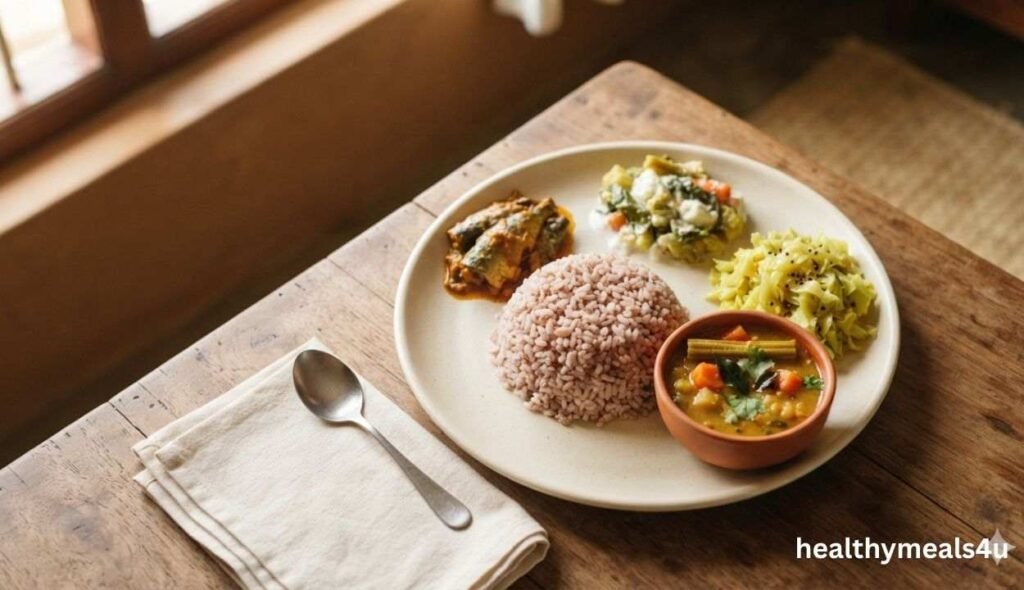
Mostly yes, if the comparison is polished white rice. Matta keeps its bran, so it has more fibre and usually a lower glycaemic index (GI). It’s still rice, though. Still carbohydrate. How much you eat, and what sits next to it on the plate, counts for more than the colour of the grain.
I’m not a doctor or a dietitian. I’m a home cook in Kerala who eats matta rice often. This post explains what the research says, why websites give different numbers, and exactly how I cook and serve it.
Quick facts about matta rice (cooked)
Also called | Kerala red rice, Palakkadan matta, rose matta, and red parboiled rice |
Glycaemic index | 52-65 |
Calories per 100 g cooked | around 110 to 130 kcal (possible variations exist based on the quantity of water retained during the cooking process) |
Carbohydrate per 100 g cooked | roughly between 21.5 g and 28 g (it differs depending upon the type of grains received; normally, carbohydrate foods have a content ranging from 21 to 28 g) |
Fibre per 100 g cooked | approximately 3 to 4 g (depends on the level of outer bran) |
Portion I serve | I usually take 1 cup with protein, healthy fat, and leafy vegetables for lunch. |
What is matta rice?
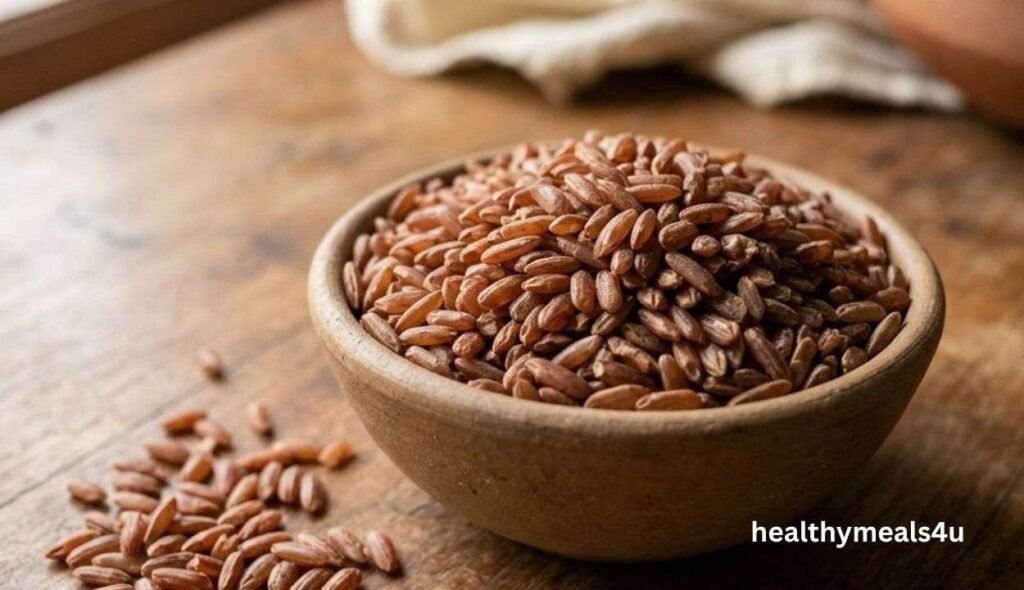
Reddish-brown, thick-grained, grown mainly in Kerala. The paddy is soaked and steamed before milling (that’s the parboiling) and only lightly polished after. The red bran stays. So does the fibre.
It tastes earthy, and the grain holds its shape once cooked. Which is why it ends up under sambar, fish curry and kanji.
Why do websites give different GI numbers for matta rice?
Search this and you’ll find “low GI” on one page and “medium” on the next. One diabetes site I checked listed a GI of 55 and, a few lines later, called matta rice not advisable for diabetics. Same site. Same page.
The numbers differ for real reasons. Palakkadan matta, rose matta and vadi matta are different grains. More polishing strips, more bran. Parboiling changes the starch, which is why it usually lands lower than raw white rice. Then your pot: how much water, how long it cooked, and whether the rice cooled before you ate it. Labs use different volunteers and different portion sizes. And two people eating the same plate can react differently.
So a GI number is a rough guide. Not a promise.
People also miss this: GI tells you how fast a food raises blood sugar. It says nothing about how much carbohydrate is on your plate. A big heap of low-GI rice can still push your sugar up.
Matta rice vs white rice vs brown rice
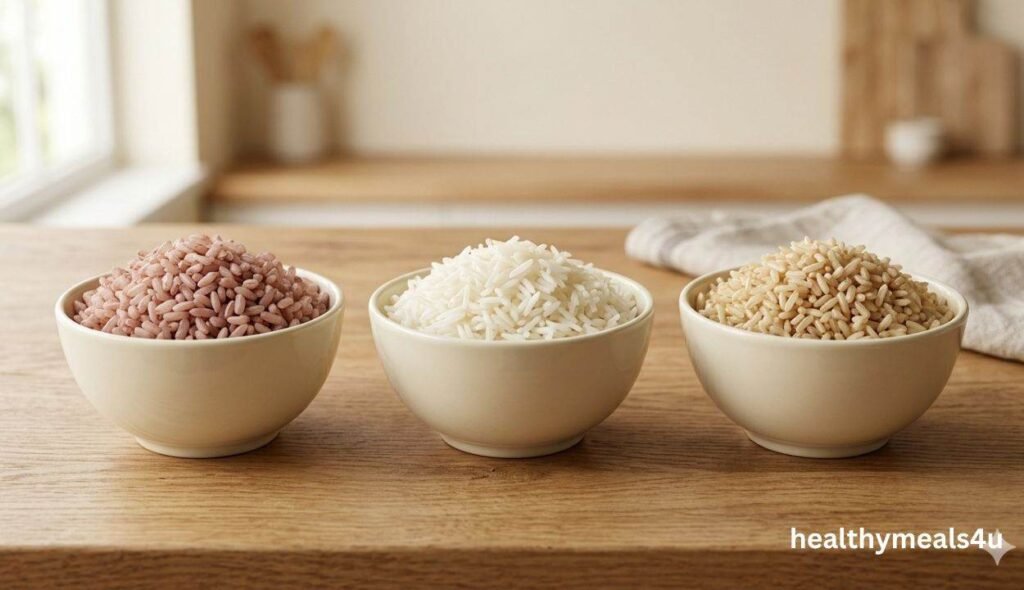
Matta rice | Polished white rice | Brown rice | |
Fibre | Higher than white | Lowest | High |
Glycaemic index | 52-65 | 72-73 | 50-68 |
Taste and texture | Earthy, firm, thick grain | Soft, mild | Nutty, chewy |
Cooking time | Longer than white | Short | Long |
In general, all three are carbohydrate foods. Matta and brown rice are usually the better choices over polished white rice, but neither makes rice “free”. Still uncomfortable with this, you can try rice alternatives like little millet, ragi and wheat.
How do I cook matta rice at home?
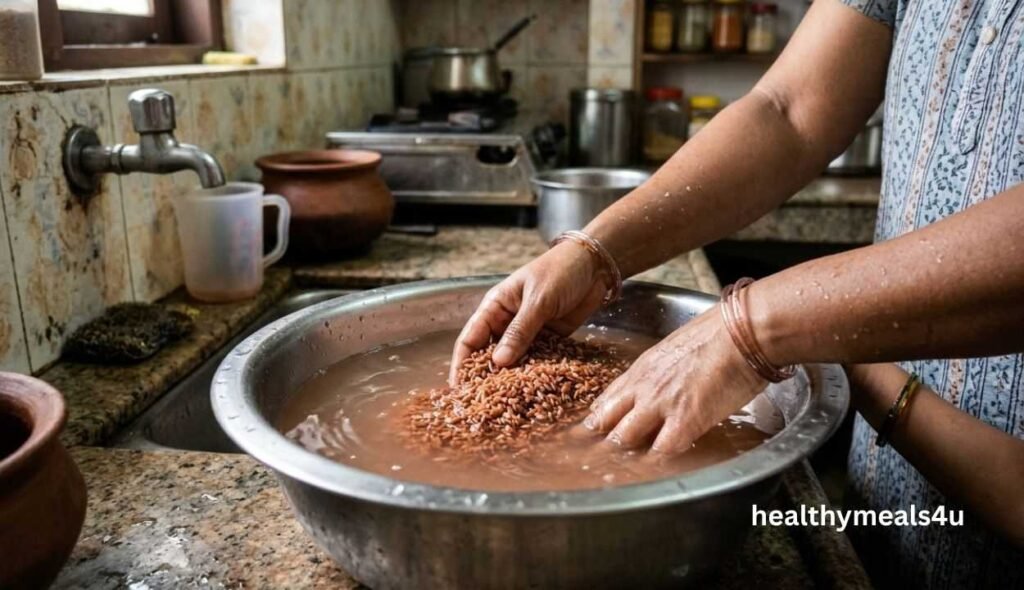
This is the method I use in my kitchen in Kerala. It is a family habit, not a medical recommendation.
- Washing: I don’t soak it. I wash it about six times in medium-hot water until most of the red stops running out. That’s a lot of washing, and it takes off surface colour and some starch. Want a deeper red and a stronger taste? Wash less.
- Quantity: I cook for two and make about three servings, so there’s some left for the next meal. So, I take 2 cups of dry rice.
- Water: Medium pot, about three-quarters full. If it runs dry before the rice is soft, I top it up with hot water.
- Cooking: Use the full flame level until the water boils, and then put it on the lowest flame, enough to slow cook. This will take a total of 1 hour 20 to 30 minutes. But it actually depends on the rice. Cook until the grains are soft but still separate. Use a covered steel pot or pressure cooker. A pressure cooker will save time and energy. It requires only 20 to 30 minutes.
- Draining: The old Kerala way. I tilt the pot to roughly 60 degrees over a vessel and let it drain about 10 minutes. The water, or starch water, or kanji vellam in Malayalam, goes to my curry leaf plant. It is also good as an energy drink, but watch the calories.
About draining: plenty of people here swear it makes rice lighter. I haven’t found strong evidence that it lowers blood sugar response, and it can wash out some water-soluble nutrients. I do it because that’s how I was taught. Not because it’s proven.
What do I eat with matta rice?
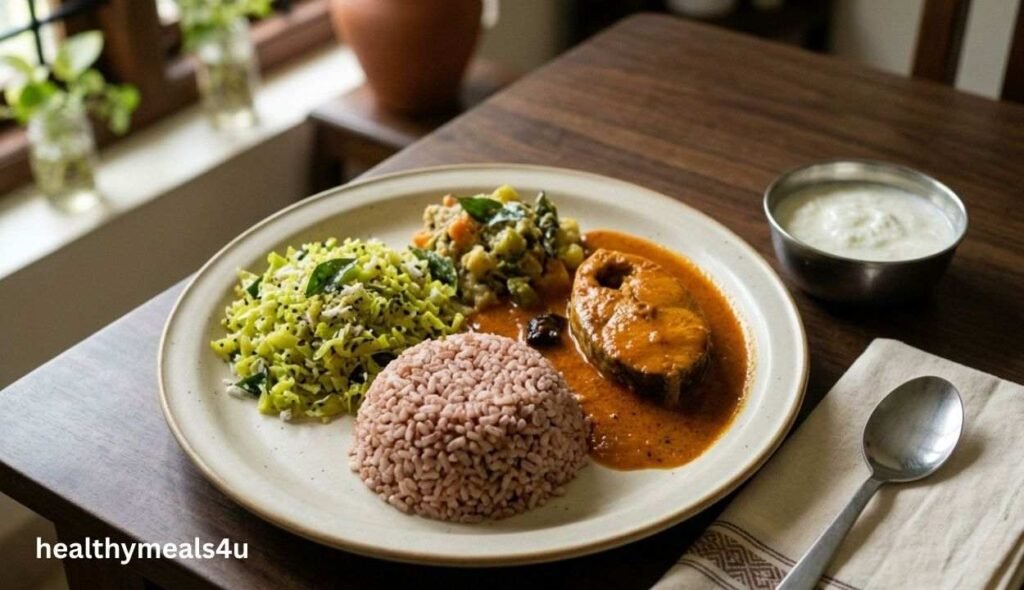
The plate matters as much as the rice. Rice with protein, vegetables and a little fat is thought to digest more slowly than rice on its own. Mine usually looks like this:
- Rice: about 1 cup cooked matta, roughly [one-third / one-quarter] of the plate
- Vegetables: Thoran, usually beans and carrots or any seasonal vegetable, is the biggest part of the plate
- Protein: fish curry / egg / dal / sambar with lentils
- Extras: curd or buttermilk, a little pickle or a simple chickpea salad on the side.
More ideas in my posts on moong sprouts and diabetic dinner ideas.
Does cooling and reheating matta rice help?
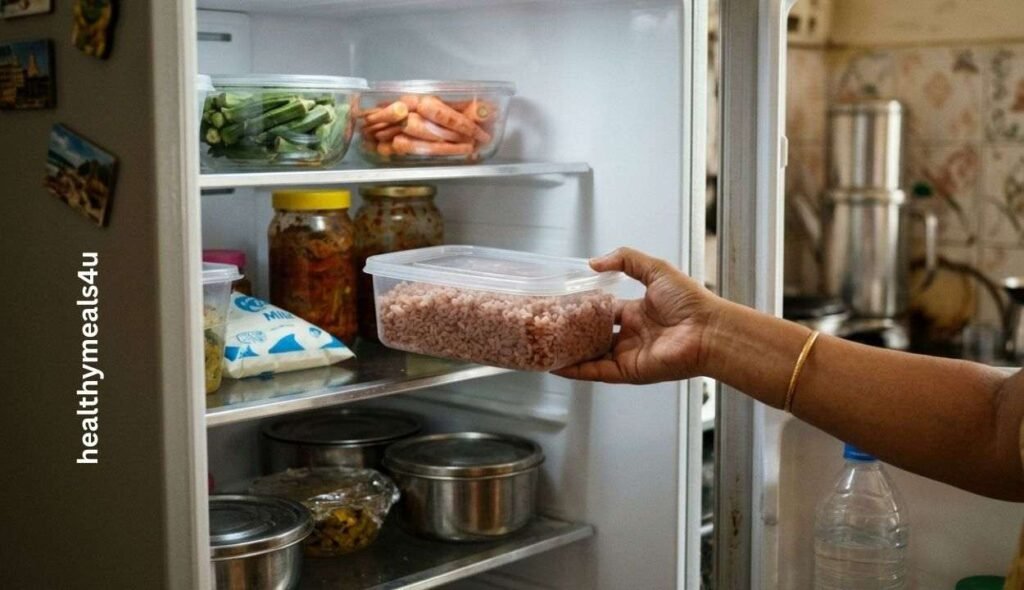
When cooked rice is cooled, some of its starch turns into resistant starch, which is digested more slowly. Some research suggests this can slightly lower the blood sugar response, and reheating does not fully undo it. The effect appears to be small and varies between people, so I would not rely on it alone. If you do store cooked rice, cool it quickly, keep it in the fridge, and eat it within a day. Rice left out in the heat can cause food poisoning.
Who should be careful with matta rice?
Talk to your doctor or a registered dietitian before changing your rice if you:
- Take insulin or diabetes medicines (portion changes can affect your dose needs)
- have kidney disease or another condition with diet limits
- are pregnant or have gestational diabetes
- See unusually high readings after meals
The best way to know how matta rice works for you is to check your own blood sugar after a meal, as your doctor advises.
Sources:
- ICMR-NIN, Dietary Guidelines for Indians (2024): rice, portion and plate guidance
- International Tables of Glycaemic Index and Glycaemic Load Values
- Parboiled Rice and Glycaemic Control: Effects on Postprandial Glucose, Insulin Sensitivity, and Incretin Response in Healthy and Type 2 Diabetic Individuals, a Pilot Study
- Effect of cooling of cooked white rice on resistant starch content and glycaemic response
Disclaimer: This article is for general information and is based on home cooking experience. It is not medical advice. Please consult your doctor or a registered dietitian about your diabetes diet.
Frequently Asked Questions
Is matta rice good for diabetes?
Better than polished white rice, thanks to the fibre and usually lower GI. It still raises blood sugar. Keep the portion modest, and put vegetables and protein next to it.
Can diabetics eat matta rice every day?
Many do. The right amount depends on your medicines, your targets and the rest of your diet, so ask your doctor or dietitian for a personal portion.
Is matta rice better than brown rice for diabetes?
Both beat polished white. Which is better for you depends on your own blood sugar response and on which one you’ll actually enjoy eating week after week.
How much matta rice can a diabetic eat per meal?
There’s no single answer. A common starting point is about a quarter to a third of the plate, with vegetables and protein taking the rest.
Is Palakkadan matta different from other matta rice?
Yes, a bit. Palakkadan is the best-known, grown around Palakkad. Rose matta and vadi matta differ in grain size, taste and cooking time.
Does washing matta rice remove nutrients?
It takes off surface colour and some starch, and maybe a little of the water-soluble nutrients. A few gentle rinses are usually enough if you want to keep the colour and taste.