
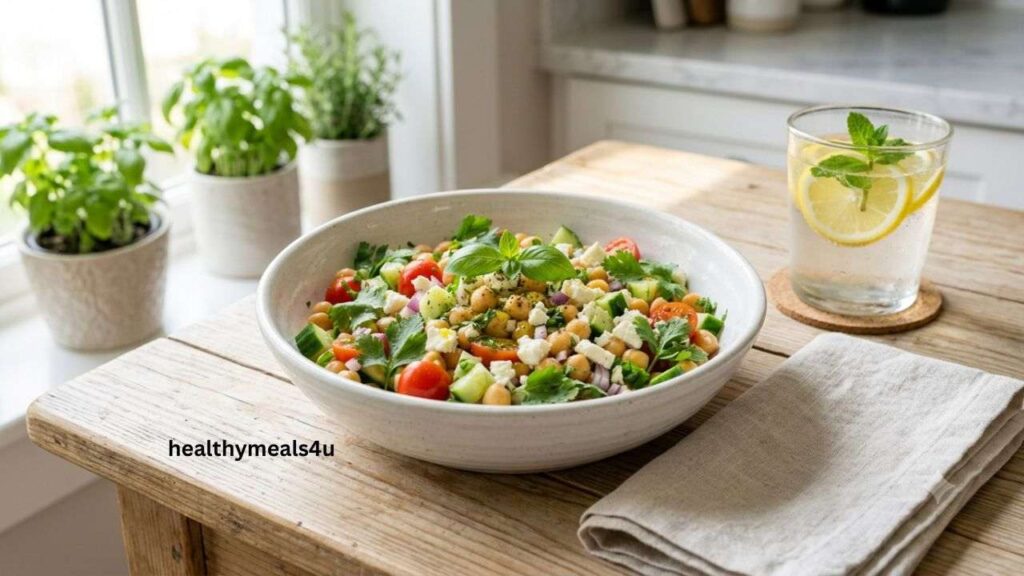
When my mother was diagnosed with type 2 diabetes, salad became a bit of a dirty word around our house. To her it meant sad lettuce and being hungry again an hour later. This Indian-style chickpea salad recipe that changed her mind. Enough protein, enough fibre, and enough bite that it actually reads as a meal instead of a consolation prize.
I’ve made it more times than I’d like to admit, tweaking dressings, soaking times, and add-ins, mostly trying to work out what keeps her blood sugar steady between lunch and dinner. Here’s where I landed, and a couple of things I got wrong on the way there.
It’s cooked chickpeas, vegetables, herbs, and a light dressing, sitting around 28–35 on the glycaemic index, with something like 12–15 grams of protein and 8–10 grams of fibre per serving. That’s the whole reason it works if you’re managing diabetes, watching your weight, or just want something that’s good for your heart without tasting like it. For more ideas along these lines, see this Indian dinner ideas for diabetics roundup.
What is chickpea salad Indian, really?
Cooked chickpeas — garbanzo beans, chana, or whatever you grew up calling them — mixed with chopped vegetables, herbs, and something acidic, usually lemon and olive oil. Warm or cold, a side dish or the whole meal, whatever you need it to be.
If you grew up around Indian food, you’ll recognise the overlap with chana chaat or kabuli chana salad, though the chaat version usually runs spicier and tangier, with chaat masala, tamarind, and sev thrown on top. This Indian-style chickpea salad stays closer to a clean, diabetes-friendly salad, but I’ll point out along the way where you can pull those chaat flavours in without the sugar or refined starch.
Why does the salad with chickpeas actually help?

Chickpeas pair slow-digesting carbs with plant protein and fibre, and that combination is what slows glucose absorption and keeps you full. That’s the short version. Here’s the longer one, plus what I’ve actually noticed feeding this to my mother for months now.
Blood sugar stays steadier, mostly because chickpeas start low on the glycaemic index and the fibre and protein slow down how fast those carbs become blood glucose in the first place. Legumes like chickpeas show up on the low-GI lists from the Indian Council of Medical Research and the National Institute of Nutrition as something people managing diabetes should be reaching for.
You also stay full longer. Protein and fibre together slow how quickly your stomach empties, and my mother used to be hungry an hour after a rice-heavy lunch. With this, she goes three or four hours without wanting a snack.
The fat in the dressing matters too, assuming it’s the right kind. Olive oil and nuts bring monounsaturated fat, which the American Diabetes Association links to better cardiovascular outcomes for people with diabetes — but only when it’s replacing saturated fat rather than sitting on top of it.
There’s a gut health angle as well. Chickpeas carry a lot of resistant starch and soluble fibre, which is essentially food for the good bacteria living in your digestive system. And you get real protein without any cholesterol attached — a cup of cooked chickpeas runs around 15 grams of protein with none.
One thing I got wrong early on: don’t skimp on the dressing fat to save calories. A bit of healthy fat actually softens the blood sugar spike from the carbs in the chickpeas themselves, so cutting it back backfires on you.
Who is Indian chickpea salad good for?
People managing type 2 diabetes or prediabetes will get the most obvious benefit here, thanks to the low GI and fibre. Indian chickpea salad also suits anyone trying to lose or hold their weight, since it fills you up without costing much calorically, and it’s a dependable plant protein if you’re vegetarian or vegan. If you’re watching cholesterol, it works as long as the dressing stays olive oil rather than something heavier. And if your digestion has been irregular, the fibre here helps — just ease into it rather than going all in on day one. This salad doubles as an Indian diabetic recipe for lunch.
Who should think twice or adjust this chole salad?
If you have IBS or are sensitive to FODMAPs, chole salad can cause bloating or gas — rinsing canned ones well and starting with a smaller portion tends to help. If you’re on blood thinners, keep your intake of vitamin K-rich vegetables like kale or parsley consistent, since sudden swings there can throw off how your medication behaves; that’s worth raising with your doctor rather than guessing at. Skip it entirely if you have a legume allergy, obviously. And if you’re on a low-fibre diet during a digestive flare-up, check with a doctor before making this a regular thing.
There’s no strong evidence that chole salad cause problems for kidney disease patients at normal intake, but the potassium and phosphorus content means portion size matters if you’re on a renal diet. That’s really a question for a nephrologist or dietitian, not something I can settle here.
What's actually in a serving of chole salad?
For about a cup and a half, home-cooked or well-rinsed:
Nutrient | Amount | Notes |
Calories | 220–260 kcal | Depends on how much dressing |
Protein | 12–15 g | Higher with paneer or feta added |
Carbohydrates | 28–32 g | Mostly complex carbs |
Fiber | 8–10 g | Around a third of your daily target |
Fat | 8–12 g | Mostly from olive oil |
Glycemic Index | 28–35 | Low category |
Glycemic Load | 6–8 | Low for the full serving |
Sodium | 200–350 mg | Depends on canned vs. home-cooked |
Add cheese, extra oil, or dried fruit, and those numbers move — there’s a comparison further down for that. Worth remembering: one bowl gets you close to a third of your daily fibre, and the GI stays low even counting the carbs from the chickpeas themselves.
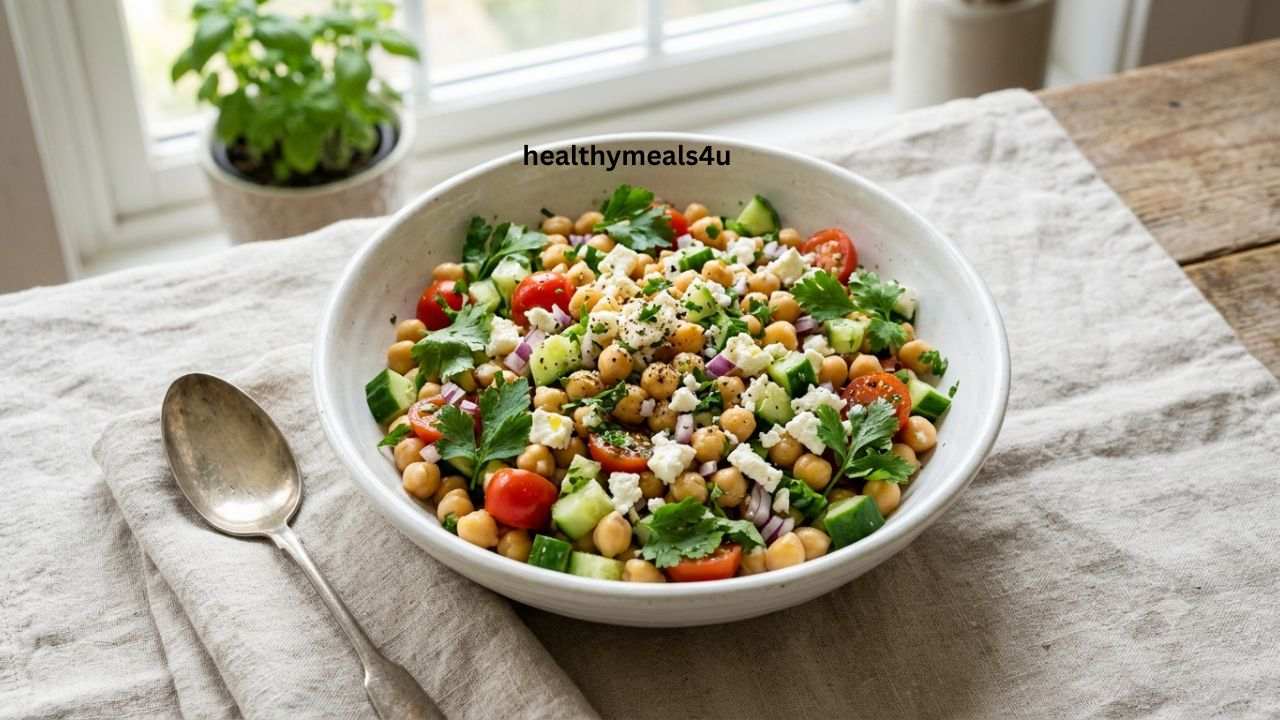
Indian Style Chickpea Salad Recipe
- For the base:
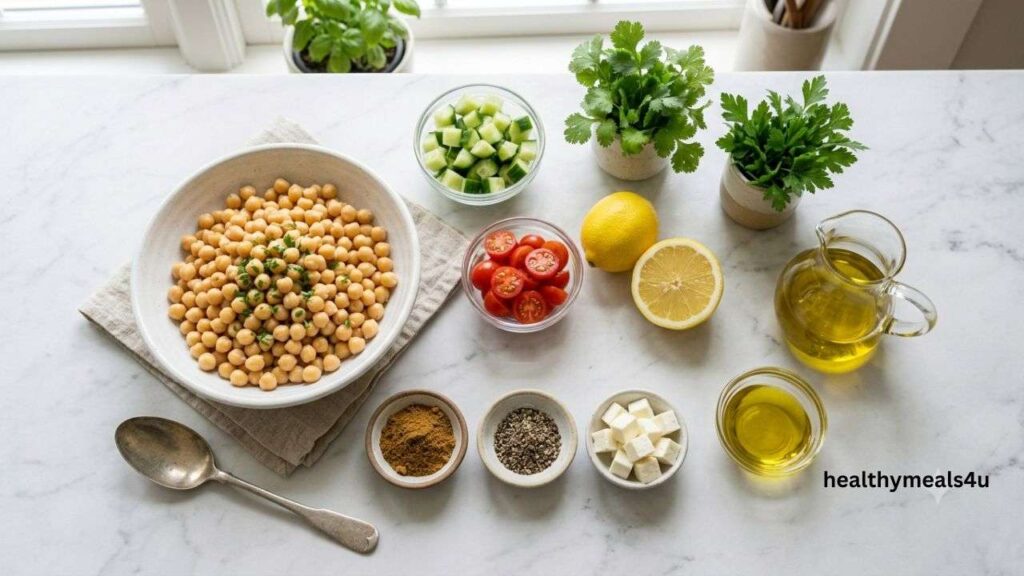
- 2 cups cooked chickpeas or one 400g can, rinsed and drained well
- 1 cucumber diced
- 1 medium tomato deseeded and diced
- ½ red onion finely chopped
- ½ cup fresh coriander or parsley chopped
- ¼ cup crumbled feta or paneer if you want more protein
- For the dressing:
- 2 tablespoons extra virgin olive oil
- 2 tablespoons fresh lemon juice
- ½ teaspoon roasted cumin powder
- ¼ teaspoon black pepper
- Salt to taste
- A pinch of chaat masala if you want the tang
- If you want it more chaat-like:
- 1 green chili finely chopped
- ½ teaspoon chaat masala
- A few mint leaves
- Tamarind pulp in place of the lemon
- Fifteen minutes of prep if you're using canned chickpeas, 40–45 if you're starting from dried. Makes four servings.
- Start with the chickpeas.
- Dried ones need an overnight soak and 15–20 minutes in a pressure cooker until soft but not falling apart.
- Canned ones just need a solid rinse under running water, at least 30 seconds — this matters more than it seems, since it washes off the excess sodium and the starchy liquid that otherwise leaves the salad tasting faintly tinny.
- Chop the vegetables small enough that a spoonful contains cucumber, tomato, and chickpeas together, and deseed the tomato so that things don't go watery.
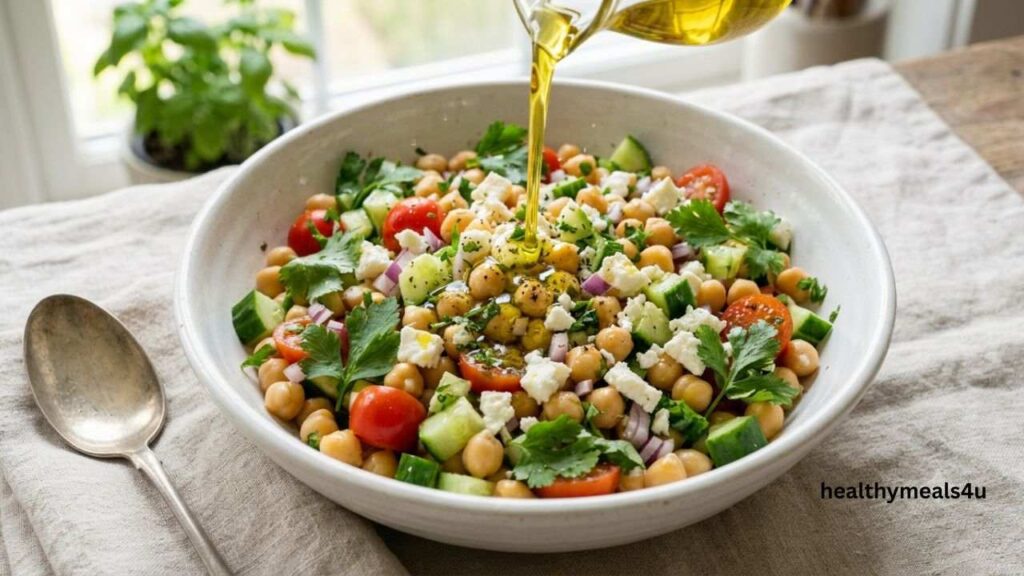
- Whisk the dressing — oil, lemon, cumin, salt, and pepper — until it appears slightly thickened rather than separated.
- Then, toss everything together, holding off on the dressing until just before serving.
- Let it sit about 10 minutes so the chickpeas soak up a little dressing without going soggy, then taste it: more lemon if it's flat, more salt if it's dull, a pinch of chaat masala if you're after that familiar tang.
- The mistake I made for three days running before I figured it out: dressing the salad too early.
- Let it sit dressed for more than an hour, and the cucumber releases water, and the whole thing turns watery and bland.
A few things I've picked up along the way
The mistake I made for three days running before I figured it out:
- Dressing the salad too early. Let it sit dressed for more than an hour, and the cucumber releases water, and the whole thing turns watery and bland.
- Roasting the chickpeas gives you a warm version — toss them in a teaspoon of oil with cumin and roast at 200°C for 15 minutes; it’s good for winter and it adds some crunch. I batch-cook on Sundays and freeze it in 2-cup portions, which gets my weeknight prep down to under 10 minutes.
- For more protein without added sugar, boiled egg whites, grilled paneer, or a bit of grilled chicken all work fine.
- And don’t cut the lemon. It’s not just there for flavour – vinegar and lemon juice have been studied for a modest role in blunting post-meal blood sugar spikes when eaten alongside carbs. Modest is the operative word; it won’t replace medication or a balanced diet, but it helps.
- Skipping the rinse on canned chickpeas, which leaves both sodium and a starchy aftertaste.
- Cutting the fat in the dressing, which actually hurts fullness and the blood sugar response.
- Overcooking the chickpeas until they’re mushy, which makes portions harder to judge.
- Reaching for chaat masala or sauces with hidden sugar, especially the store-bought blends.
Ways to change it up
Variation | What changes | Good for |
Mediterranean-style | Olives, feta, red bell pepper | Fans of heart-healthy fat |
Chana chaat style | Tamarind, chaat masala, sev, boiled potato | Missing chaat flavors |
High-protein bowl | Grilled paneer or boiled egg added | Extra protein needs |
Low-sodium version | Home-cooked chickpeas, no chaat masala, just herbs | Blood pressure management |
Warm roasted version | Roasted with cumin and paprika | Cold weather, more texture |
If chickpeas don’t agree with you, black-eyed peas or sprouted moong gives you a similar protein and fibre profile with an easier digestive load for some people.
How it stacks up against other salads
Salad | Calories | Protein | GI | Best for |
Chickpea salad | 220–260 | 12–15 g | 28–35 (low) | Blood sugar, plant protein |
Sprouted moong salad | 150–180 | 9–11 g | 25–30 (low) | Lighter meal, easier digestion |
Rajma (kidney bean) salad | 230–270 | 13–14 g | 24–29 (low) | Similar benefits, different flavor |
Plain garden salad, no legumes | 80–120 | 3–5 g | N/A | Low-calorie side, not filling alone |
Legume-based salads beat plain vegetable salads on fullness and blood sugar stability pretty reliably, mostly because vegetables alone just don’t bring that protein-fibre combination to the plate.
Why does chole salad actually work for diabetes-friendly eating?
Chickpeas carry complex carbohydrates bound up with fibre and resistant starch, so they digest more slowly than refined carbs like white rice or bread. That’s largely why the ADA’s nutrition guidance for diabetes points to legumes as a preferred carb source — they raise blood sugar more gradually and to a lower peak than refined starches manage.
ICMR-NIN’s dietary guidelines for India list pulses generally, chickpeas included, as a recommended protein source, and call out their place in a balanced plate for people managing diabetes and heart risk specifically.
None of that makes this a cure or a guarantee. Your own blood sugar response depends on portion size, what else is on the plate, how active you are, and your medication. If you’re tracking your blood sugar, checking it an hour after eating this will tell you more about your own response than any general guideline can.
Frequently Asked Questions
1. Is Indian Style Chickpea Salad actually good for diabetics?
For most people, yes. The low GI plus fibre and protein slows the blood sugar rise after eating, though portion size and dressing choice still matter.
2. How many calories is chickpea salad about?
A standard 1.5-cup serving with olive oil dressing runs 220 to 260 calories. Cheese, nuts, or extra oil push that up.
3.Can I eat chole salad every day?
Most people can eat it several times a week without issue. If you notice bloating, cut back on portion size or frequency, or soak dried chickpeas a bit longer before cooking.
4. Are canned chickpeas as healthy as dried?
Pretty close nutritionally. Canned food usually has added sodium, but rinsing brings that down a lot. Drying gives you more control but takes longer.
5. What are the other options if you are allergic to chickpeas?
Black-eyed peas, sprouted moong, or black beans all slot into this same recipe with a similar protein and fibre profile.