
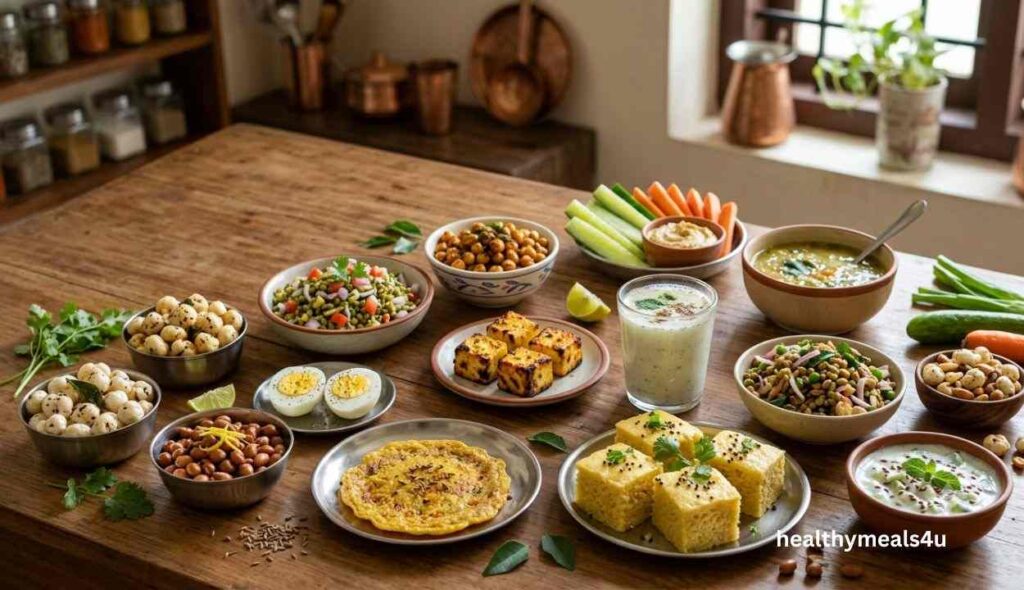
Short version: if your fasting reading has been climbing and it’s already 5 PM, something with fibre and protein in it. Roasted makhana. Sprouted moong chaat. Roasted chana. A boiled egg. Keep the portion small. Skip anything fried; skip anything made with maida. That’s really all there is to it — everything below is just that one idea, worn fifteen different ways.
That 5 PM hunger has a texture that’s different from any other hunger of the day. Lunch already feels like something that happened last week. Dinner’s still a good two hours away, and the tea-and-biscuit habit most of us picked up growing up in a Kerala household is now, apparently, exactly what we’re meant to avoid — which does feel a little cruel when you sit and think about it. I know this from close range, because I watched my mother-in-law fight this exact battle after her diagnosis. She’d hold out till around six, then cave and polish off three or four Marie biscuits, standing at the counter as if nobody could see her, and her glucometer told on her without fail every single time.
Nothing here is theory. I’ve cooked every one of these in my own kitchen, most often on evenings when she needed something in the next fifteen minutes and I had absolutely no bandwidth left to plan anything fancy. A couple of them. Best Evening Snacks Ideas: 15 Indian Snacks for Diabetics That Actually Work. I popped the first attempt—I’ll flag exactly where. What survived is what actually stood up to scrutiny, cross-checked against the ICMR-National Institute of Nutrition and the American Diabetes Association’s own guidance on diabetic snacking: Pair protein or fat with carbs so the sugar rise is gradual, not a spike
Quick Answer: 15 Best Indian Snacks for Diabetics
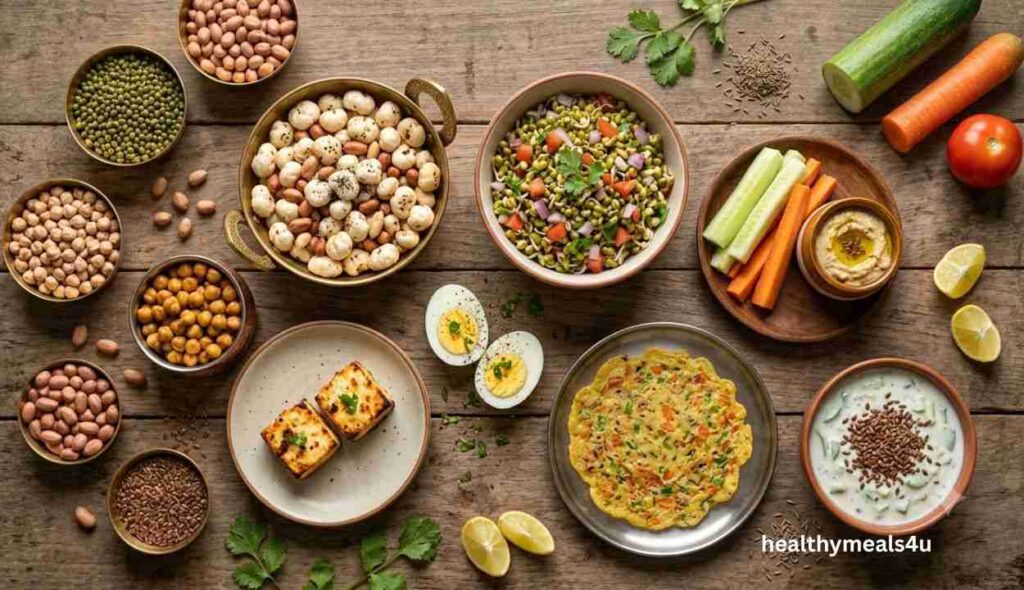
- Roasted makhana (fox nuts)
- Moong sprouts chaat
- Roasted chana (chickpeas)
- Cucumber and carrot sticks with hummus
- Vegetable soup with lentils
- Paneer tikka (grilled, not fried)
- Boiled egg with black pepper
- Roasted peanuts with a squeeze of lemon
- Moong dal chilla
- Buttermilk (chaas) with roasted cumin
- Sprouted moth bean salad
- Steamed dhokla
- Vegetable oats upma
- Roasted makhana-peanut trail mix
- Cucumber raita with flax seeds
Why Evening Snacks for Diabetic Patients Matter So Much?
A lot of what’s written about Indian diabetic recipes obsesses over lunch and dinner and treats the evening gap like an afterthought. Wrong place to relax, honestly, because the evening gap is where the whole day tends to come undone. Go four or five hours without eating, and nobody’s first instinct is a cucumber stick — you grab whatever’s fried and closest to hand, and that particular combination, hungry plus fried plus fast, is what sends blood sugar up hardest. I’ve caught myself doing it on a rough day, and I don’t even have a glucometer to answer to.
The RSSDI, the ADA, and ICMR-NIN all circle back to more or less the same conclusion, dressed up in their own committee language: a high-fibre diet built on whole pulses, sprouted grains, and vegetables beats plain restriction every time I’ve watched it play out against her numbers. The ADA puts it bluntly enough — snacks high in fibre, protein, and healthy fat, with carbohydrates entirely optional. A snack built along those lines isn’t a break from the plan. It’s the thing that stops the plan from collapsing at 7 PM into whatever happens to be closest.
At a Glance: Fibre, Protein and Prep Time
Snack | Fibre (approx.) | Protein (approx.) | Prep time |
Roasted makhana | 3g / 30g bowl | 3g | 10 min |
Moong sprouts chaat | 4g / 100g | 7g | 5 min (after sprouting) |
Roasted chana | 5g / 30g | 6g | 5 min (after boiling) |
Cucumber-carrot sticks + hummus | 4g | 4g | 5 min |
Lentil vegetable soup | 5g | 6g | 20 min |
Paneer tikka (grilled) | <1g | 10g | 20 min (+ marinating) |
Boiled egg | 0g | 6g | 10 min |
Roasted peanuts + lemon | 2g / 20g | 5g | 5 min |
Moong dal chilla | 4g | 8g | 15 min |
Buttermilk with cumin | <1g | 2g | 2 min |
Treat these as ballpark figures, not a lab report — the numbers move depending on exactly how much you cook and what goes into the pan that day. Nobody’s weighing a bowl of makhana on a kitchen scale at 5:15 in the evening, least of all me.
Evening Snacks for Diabetic Patients
1. Roasted Makhana (Fox Nuts)
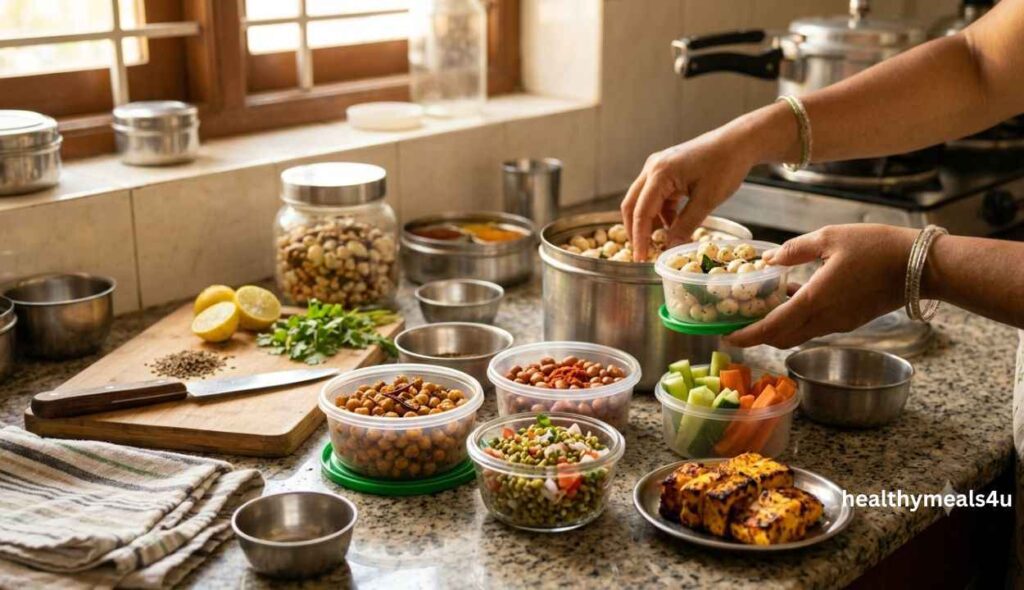
This is my go-to on the nights I have zero mental energy for anything more complicated, which, if I’m being honest, is most nights. There’s a longer, separate write-up on this exact one — is makhana good for diabetics? — going into the glycaemic index, correct portions, and three roasting variations.
The short of it: makhana’s low-GI, naturally light on sugar and sodium, and dry-roasted with turmeric, black pepper, or roasted cumin, it scratches the same itch as a packet of chips without any of the aftermath. My very first attempt came out rubbery instead of crisp because I had the flame too high and got distracted stirring — I kept glancing at my phone instead of the pan. Low-medium heat, constant stirring, no wandering off. Otherwise you end up where I did: a bowl of sad, chewy makhana that nobody bothers finishing.
2. Roasted Peanuts with Lemon
A small handful of dry-roasted, unsalted peanuts with lemon juice and a pinch of chilli powder gives you a decent hit of healthy fat and fibre. Portion control matters more here than with the vegetable options — an actual small handful, not the bowl-sized serving you’d put out for guests during a match. Peanuts pile up in calories faster than they seem like they should.
3. Roasted Chana for Diabetes (Chickpeas)
This is the jar-on-the-counter option, the one that asks for almost nothing once it’s made. Soak overnight, boil till just tender — not mushy, because mushy chana collapses into paste the second it hits a hot pan — then dry-roast with chaat masala and black salt until it picks up some crunch. A small bowl, roughly 30g, gives close to 5g of fibre and 6g of protein, which is a pretty fair trade for how little effort actually goes into it.
4. Cucumber and Carrot Sticks with Hummus
No stove needed, and that matters more than people give it credit for on an evening you’ve got nothing left in the tank. Raw vegetables with a protein-and-fat dip is about as low-effort, low-GI as snacking gets, and chickpea hummus keeps it in the same fibre-forward family as everything else on this list, rather than pairing the vegetables with something starchy like bread and undoing the point without meaning to. It’s also the ADA’s plate logic scaled down to snack size — non-starchy veg plus protein, nothing to count.
5. Vegetable Soup with Lentils
Most diabetic soup recipes taste like sad water with a lonely vegetable floating in it, apologising for being there. This one doesn’t—mostly because the masoor or moong dal cooked into it thickens the whole pot on its own, so you’re not reaching for cream or cornflour to give it anybody at all. It’s substantial enough to double as a light dinner on days lunch ran heavier than planned, and it’s the gentlest option here on a day when appetite or digestion is already off.
6. Paneer Tikka (Grilled, Not Fried)
Marinate paneer cubes in yoghurt, turmeric, and tandoori masala, then grill or air-fry — resist shallow-frying it, however much the smell of hot oil is calling your name on a Sunday evening. Paneer already digests slowly on its own thanks to its protein and fat content, and grilling keeps the added fat far below whatever the street-side tandoori version is doing behind the scenes.
7. Boiled Egg with Black Pepper
About as unglamorous as evening snack ideas get, and it’s on this list anyway because it works. A boiled egg barely stirs the blood sugar and hands you close to 6 g of protein for almost no effort at all — handy on the days you realise at half past five that lunch happened five hours ago and your stomach has just now decided to bring it up.
8. Moong Sprouts Chaat
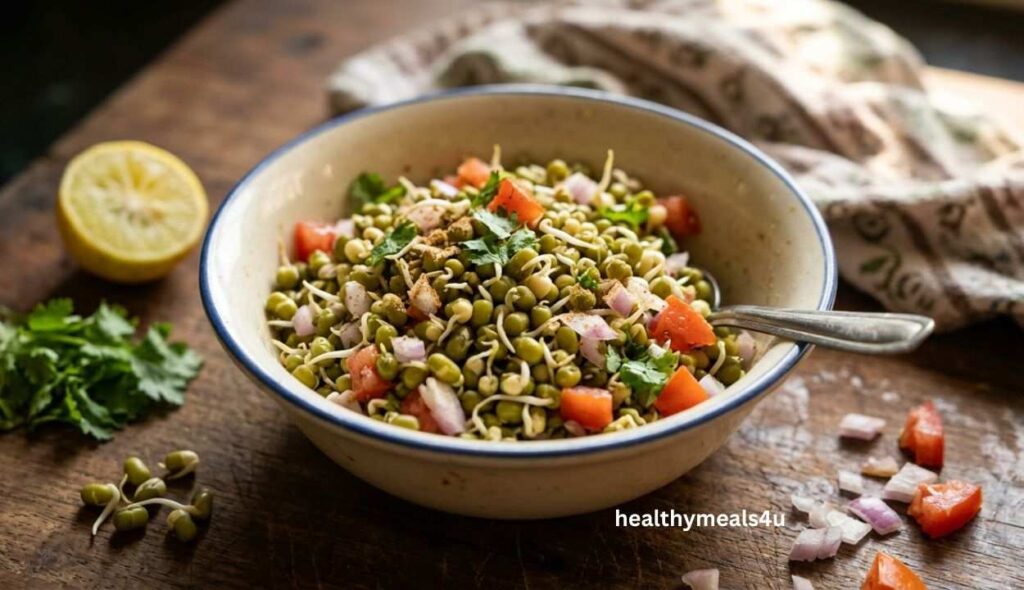
Sprouted moong shows up on nearly every ICMR-NIN list of preferred fibre sources going, and one bite of the chaat version and you stop wondering why. There’s a full recipe written up on its own — moong sprouts benefits and recipe — covering how to put together the chaat with onion, tomato, lemon, and chaat masala, without a spoonful of sugar anywhere near it.
Sprouting slows digestion down further than moong eaten plain, which is probably why this shows up near the top of nearly every diabetic snack list I came across while pulling this together — and why I usually have a batch going in a damp muslin cloth on the kitchen counter. It picks up a faint earthy smell by day two. It took me a while to stop worrying that meant something had gone wrong; it hasn’t. That’s just what sprouting smells like.
9. Moong Dal Chilla
A savoury pancake made from ground moong dal batter, cooked on very little oil and stuffed with whatever grated vegetables are sitting in the fridge — carrot, cabbage, sometimes leftover beetroot if I’m being adventurous. This is one of the more filling items on the list and genuinely stands in for a light dinner, not just a between-meals bite. I’ve served it as dinner outright on nights nobody wanted anything heavier, and not one person complained — which, in this house, counts as high praise.
10. Buttermilk (Chaas) with Roasted Cumin
A glass of spiced buttermilk with roasted cumin and a pinch of black salt is hydrating and barely registers calorie-wise, and it’s the traditional Kerala response to anything fried or heavy for good reason — it actually settles things afterward. Good for the evening, a small indulgence elsewhere in the day needs balancing rather than more restriction stacked on top.
11. Sprouted Moong Bean Salad
Same idea as the moong sprouts — soak, sprout, and toss with lemon, onion, and coriander — but moth beans have a nuttier, firmer bite and, unlike moong sprouts, they hold their shape once dressed. Prepping a day in advance? Make this one instead of the moong version. Moong sprouts turn soft and a bit sad sitting overnight in the fridge; moth beans just don’t.
12. Steamed Dhokla
Fermented besan batter, steamed rather than fried, so you get the protein and fibre of the gram flour without the oil load most besan snacks come with. Fermentation makes it a touch gentler on digestion too. Watch the tempering closely — some traditional recipes slip sugar into the tadka, and that undoes a fair bit of what the dhokla was doing right in the first place. I learned this the annoying way, from a recipe card that never once mentioned it.
13. Vegetable Oats Upma
A savoury reworking of the usual sweet oats bowl — onion, carrot, beans, and peas tempered with mustard seeds and curry leaves, finished with rolled or steel-cut oats instead of semolina. Dropping the sweetened version and loading it with vegetables is exactly what keeps this one firmly in low-GI territory instead of drifting toward dessert wearing a breakfast disguise.
14. Roasted Makhana-Peanut Trail Mix
Combine snack 1 and snack 8 — dry-roasted makhana and peanuts, a pinch of black pepper — into something that survives a commute or a desk drawer. Out of everything on this list, this is the one that travels best. Portion it into small bags in advance, because eyeballing quantity while genuinely hungry never ends well. Speaking from experience, I’ve finished off a whole bag in one sitting more than once and regretted it about ten minutes later.
15. Cucumber Raita with Flax Seeds
Whisked curd with grated cucumber, roasted cumin, and a spoon of ground flax seed. Cooling, a small dose of omega-3 from flax, and it works just as well as a standalone snack or a side to anything else on this list. I usually make a fairly big batch, and it’s always gone by the end of the meal — nobody’s ever left it sitting untouched.
A Few Ground Rules for Any Diabetic Evening Snacks Ideas
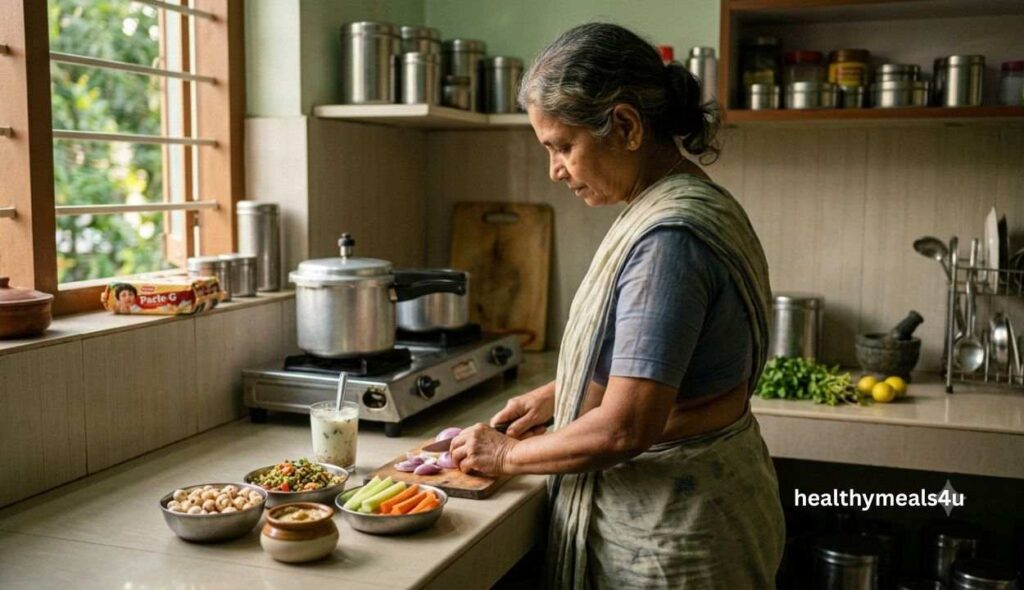
A handful of things keep repeating across every one of these Indian diabetic recipes, so it’s worth stating them once instead of scattering them across fifteen sections:
- Pair carbs with protein or fibre: A carbohydrate eaten alone digests faster than the same carbohydrate eaten alongside protein, fat, or fibre.
- Dry-roast or steam instead of deep-frying: It’s not purely about the calories — it changes how quickly the snack actually hits blood sugar.
- Watch the portion, even on the “safe” foods: Peanuts, makhana, and chana are all reasonable choices, but a large bowl of any of them adds up fast, and I’ve personally seen a perfectly healthy snack undo an otherwise good day just because the bowl was too generous.
- Keep added salt in check: ICMR-NIN currently recommends capping added salt at around 5g a day, in line with World Health Organization guidance, which matters even more when blood pressure is being managed alongside diabetes.
This is general information based on established dietary guidelines, not a substitute for advice from your own doctor or dietitian — adjust the specific foods and portions to your own blood sugar readings and whatever else you happen to be managing alongside the diabetes.
Frequently Asked Questions
Can diabetics eat snacks in the evening?
Yes — the ADA’s own guidance recommends choosing snacks high in fibre, protein, and healthy fat if snacking is part of the plan, rather than skipping the gap between lunch and dinner entirely, which tends to just push the overeating to later that night.
What is the best time for a diabetic evening snack?
There’s no single fixed clock time, but most people do better eating something small 3–4 hours after lunch, before hunger builds up enough to push them toward something fried or sugary out of sheer impatience.
Is makhana good for diabetes?
Yes, in moderate, dry-roasted portions — low glycaemic index, naturally low in sugar and sodium.
How much roasted chana can a diabetic eat in one sitting?
About 30 g, a small bowl, is a reasonable single portion — roughly 5 g of fibre and 6 g of protein without the calories creeping up on you.
Are fried snacks completely off-limits for diabetics?
Not strictly, but frying tacks on fat and calories on top of whatever the base ingredient already brought, and it’s rarely necessary — most of what’s on this list tastes just as good dry-roasted, grilled, or steamed. I say this as someone who genuinely loves fried food and needed several disappointing weeks to actually believe the rest of this list myself.