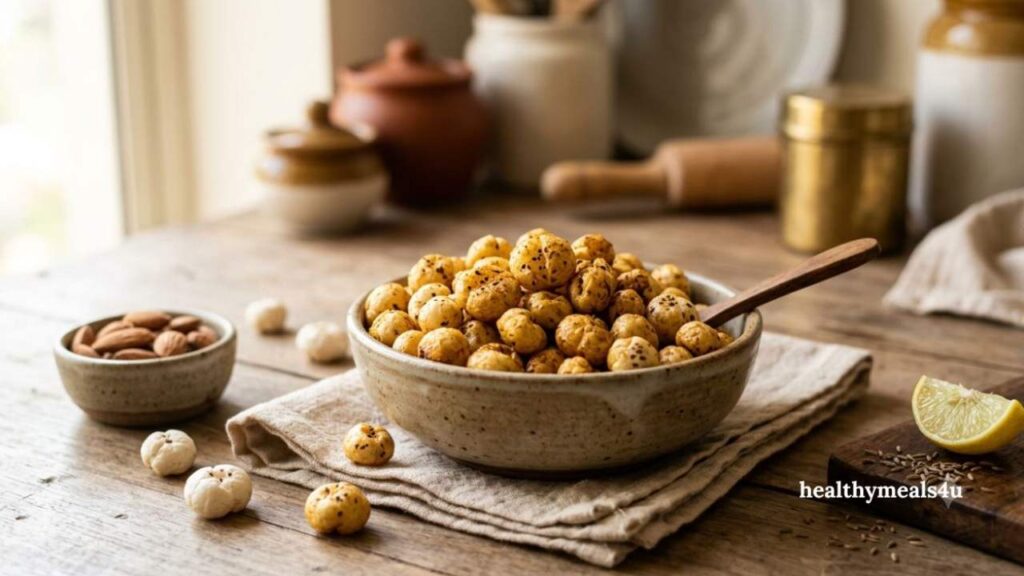
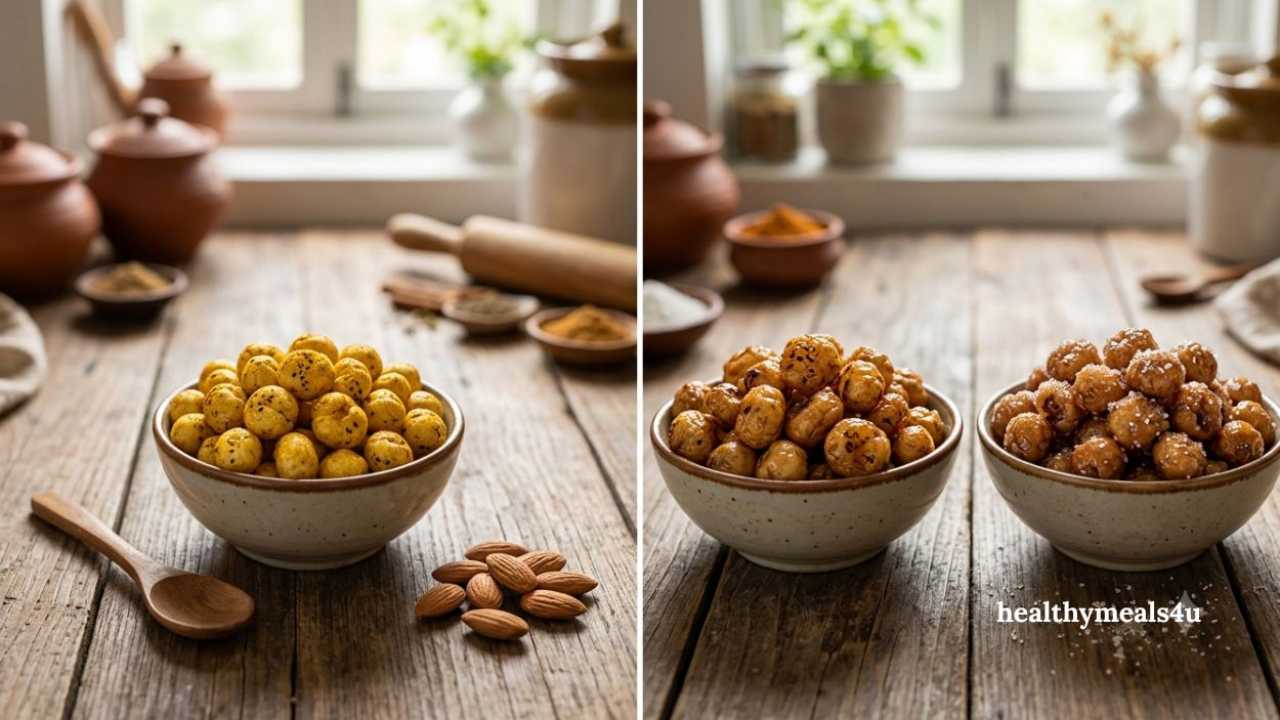
Short answer: yes, makhana is good for diabetes, as long as you’re dry-roasting it and not going overboard with the portion. Low glycaemic index, barely any fat, and enough fibre to slow the whole thing down. Fry it or dunk it in sugar syrup, though, and you’ve basically undone the point.
I started making this properly after my mother was told she has type 2 diabetes. I wasn’t about to hand her a bowl of something just because some website called it a “superfood” — I’ve seen too many of those claims fall apart the moment you check them. So I actually sat with the research for a weekend. Here’s what held up and what didn’t.
What Is Makhana?
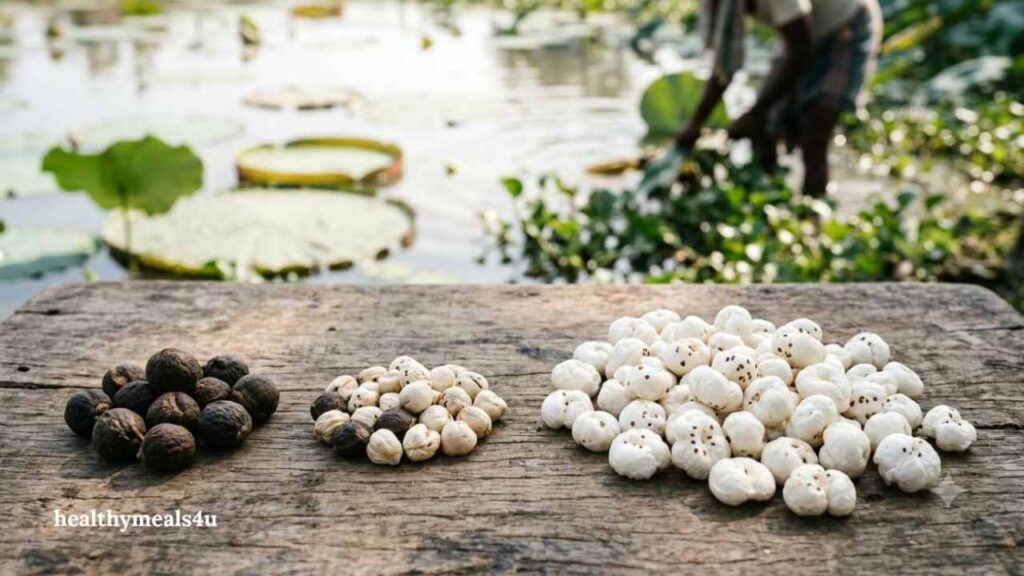
It’s the popped seed of Euryale ferox, a water lily that grows in the wetlands of Bihar. You’ve probably seen it sold as ‘fox nuts’ or ‘lotus seeds’ if the packet’s feeling fancy.
- Pulled from ponds, dried, then roasted until it puffs — genuinely does look like tiny popcorn the first time you see a batch go
- Naturally gluten-free
- The thing every household breaks out during Navratri fasting, mine included, though we never used to eat it any other time of year
This piece sticks to the diabetes angle specifically, but there’s a wider rundown of what else it’s linked to — skin, heart health, that sort of thing — if you want the fuller picture.
Is Makhana Good for Diabetes Patients? The Short Science
Glycemic Index of Makhana
Here’s what nobody tells you upfront: the GI number for makhana isn’t one fixed figure. It moves around depending on who did the study and how the makhana was cooked, and honestly, that inconsistency annoyed me for a while before I understood why it happens.
|
Source
|
Reported GI
|
Notes
|
|
Roasted fox nut study (food science journal)
|
37
|
Dry-roasted seeds
|
|
Diabetes-focused nutrition sites
|
30–35
|
General roasted makhana
|
|
Some Indian recipe blogs
|
Up to 55
|
Wider preparation range
|
|
Low-fat variety trials
|
As low as 22–25
|
Minimally processed, dry-roasted
|
Every one of these lands at or under 55, which is the line between “low GI” and “medium GI”. So whichever number you go with, the answer doesn’t flip. What actually moves the needle is oil, sugar, and how long you leave it on the flame – not which website you happened to read it on.
What the Research Actually Found?
A study out of the ICAR-National Research Centre for Makhana in Darbhanga put the seeds at roughly 9.7% protein and under 1% fat. That’s a low enough fat number that it genuinely surprised me the first time I read it – I’d assumed roasted snacks always carried more fat than that.
Separate peer-reviewed work that measured real people’s blood sugar response after eating it found the following:
- A GI of around 37
- Higher phenolic and antioxidant levels once roasted
- Some benefit for people managing obesity and diabetes, used alongside actual treatment – not instead of it
I want to be clear about that last part, because I’ve seen people treat makhana like it replaces medication. It doesn’t. It’s a decent snack. That’s the whole claim.
Makhana Nutrition at a Glance (per 100g)
- Calories: ~347
- Protein: ~9.7g
- Fibre: ~14.5g
- Fat: under 1g
- Minerals: magnesium, potassium, calcium, phosphorus
The fibre number is really the story here, more than the calories. Fibre slows everything down, so the carbs in makhana trickle into your blood rather than arriving all at once, which is the whole reason diabetic diets go looking for high-fibre foods in the first place.
How Much Makhana Can You Eat With Diabetes?
There isn’t one number that applies to every single person — I wish there were; it’d make this section shorter. But most of what I’ve read agrees on a modest daily handful rather than treating it as free food.
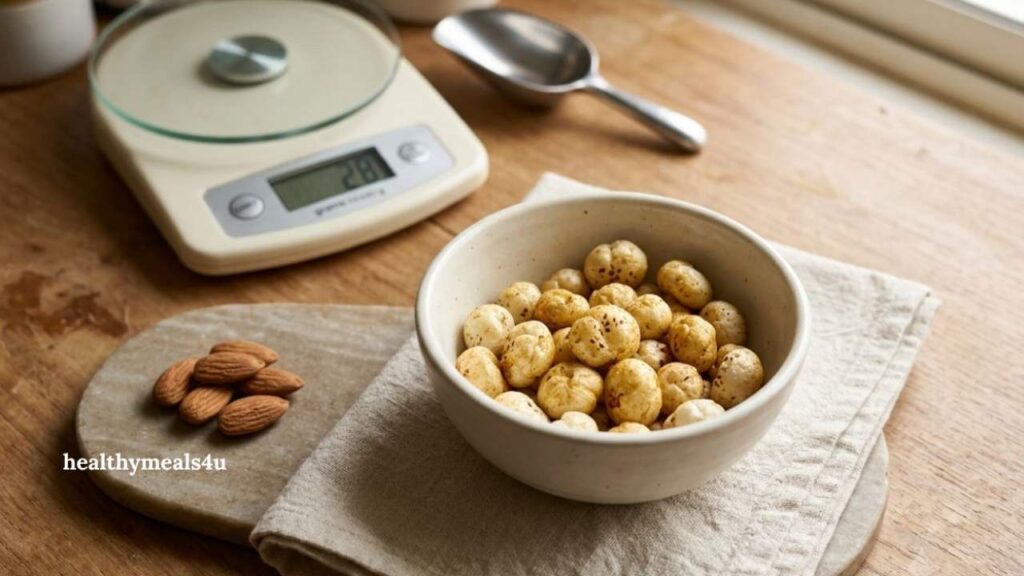
- A small bowl, somewhere around 25–30g, is a reasonable daily amount for most adults.
- Pairing a small bowl of makhana with a light, filling meal earlier in the day makes portion control easier — this is a soup I make often for exactly that reason.
- Eat a big bowl instead of a small one and the carbs still add up, low GI or not — that part gets forgotten a lot
- If your sugars have been all over the place lately, ask your doctor before you make this a daily thing
I’m not a doctor, and this isn’t a prescription. It’s what I do at home.
The Right Way to Cook Makhana for Diabetes
This is the bit I actually got wrong at first. I assumed makhana was makhana, whatever you did to it. It isn’t.
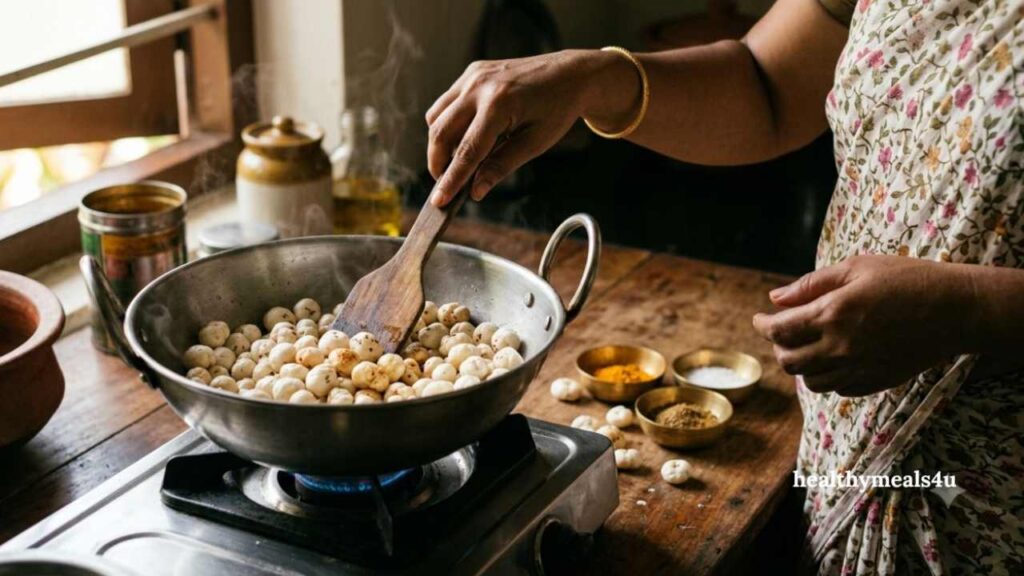
- Dry roast it. Don’t fry it. Frying adds fat you didn’t need and pushes the whole thing further up the GI scale.
- Skip the sugar syrup versions. Sweetened makhana kheer is lovely; I’m not going to pretend otherwise, but it cancels out everything we just talked about.
- Go easy on salt. Diabetes and blood pressure tend to show up together, so I use lemon instead of a heavier hand with the salt shaker.
- Put something with protein or fat next to it. A few soaked almonds on the side slow the digestion down even more.
I make this in a plain steel kadai — nothing special, no air fryer, no fuss.
This is the batch my mother actually finishes. Not leaves half in the bowl by the TV, but actually finishes.
Mistakes That Cancel Out the Benefit
- Deep-frying instead of dry roasting
- Adding sugar or jaggery syrup
- Eating a big bowl “because it’s healthy anyway” — I’ve done this one myself more than once. If you’re hungry enough to overeat your snacks, the fix is usually the earlier meal, not the snack – a protein-heavy salad earlier in the day solves this for me more often than not.
- Skipping your doctor’s advice if you’re on diabetes medication
Makhana’s good for diabetes when it’s dry-roasted, left unsweetened, and eaten in a sensible portion – not treated as some magic, unlimited snack, because it isn’t one. It won’t cancel out a heavy, carb-loaded meal from earlier in the day. But as a swap for whatever fried snack you’d otherwise be reaching for, it’s one of the easier changes I’ve actually managed to stick to.
This article is for general information and doesn’t replace advice from your doctor or a registered dietitian, especially if you’re on diabetes medication.