
Food for diabetes patient in India
Over one hundred million Indians are troubled with diabetes, reveals the Indian Council of Medical Research–India Diabetes (ICMR–INDIAB) study. It can damage blood vessels and nerves and affect the eyesight, heart, feet, and kidneys over time. It can also contribute to nerve pain, vision loss, infections, and kidney failure. This disease increases the risk for dementia and depression. So a stable blood sugar level is very important for our overall health.
But there is no need to be scared. Thankfully, it is also one of the lifestyle diseases we can control to a great extent. You do not have to live the rest of your life with bland foods because of it. Food for diabetes patient in India can be made interesting and flavourful with careful selection. A well-balanced Indian plate helps to get back the energetic life you once had.
Understanding Diabetes and the Role of Diet in India
Diabetes poses a significant health threat in India. Type 2 diabetes is the most common form, almost 90-95% in India. It is caused by insulin resistance or inadequate production of insulin and regular use of high-calorie, processed food. Lack of exercise adds the risk.
Genetic predisposition is another culprit. Indians are at a higher genetic risk. We have a greater tendency to accumulate weight in the waist or abdominal area and greater insulin resistance. This leads to diabetes even if you have a lower Body Mass Index (BMI).
Indians develop diabetes about a decade earlier than Western populations. This causes the risk of long-term complications, which will affect the quality of our lives.
How does diet help with diabetes prevention and management?
- Choose whole grains and millets: It is necessary to get rid of the habit of consuming refined grains such as white rice and maida. Always remember to consume whole grains that comprise of whole wheat and red matta rice with bran. Also, make a point of eating good-quality millets like jowar, bajra, and ragi. They are better in fibre and essential nutrients.
- Increase your fibre intake: Try to reach a daily total of 25-35 grammes of fibre. You may use a mixture of legumes (dal, chana, and rajma), a wide range of whole fruits, and non-starchy vegetables (spinach, bhindi, and cauliflower) for your daily intake.
- Start every day with protein: Consuming protein right before or with every meal is a very important step if you want to avoid organising a sudden sugar spike. Pulses, tofu, paneer, eggs, fish, and skinless poultry are the best sources of lean protein. Glucose levels become stable, and one feels satiated. It also works well for diabetes-related fatigue.
- Do not miss good fats: Healthy fats are indispensable in any diet. Try to avoid saturated and trans fats that are mostly present in processed and junk foods. Therefore always choose nuts (almonds, walnuts), seeds (flaxseeds, chia seeds), and vegetable oils (mustard oil, groundnut oil, canola oil). These are the sources of monounsaturated and polyunsaturated fats which are heart-healthy and essential for us.
- Portion control is a very effective method of diabetes management. Non-starchy vegetables should cover half of your plate, protein one quarter, and quality carbohydrates or whole grains the other quarter.
- Limit sweets and fried foods: Sweets, sugary drinks such as fruit juices, and deep-fried foods should be avoided. However, jaggery and honey are still permissible and, albeit not ideal, only in moderation.
Best Indian Food for Diabetes
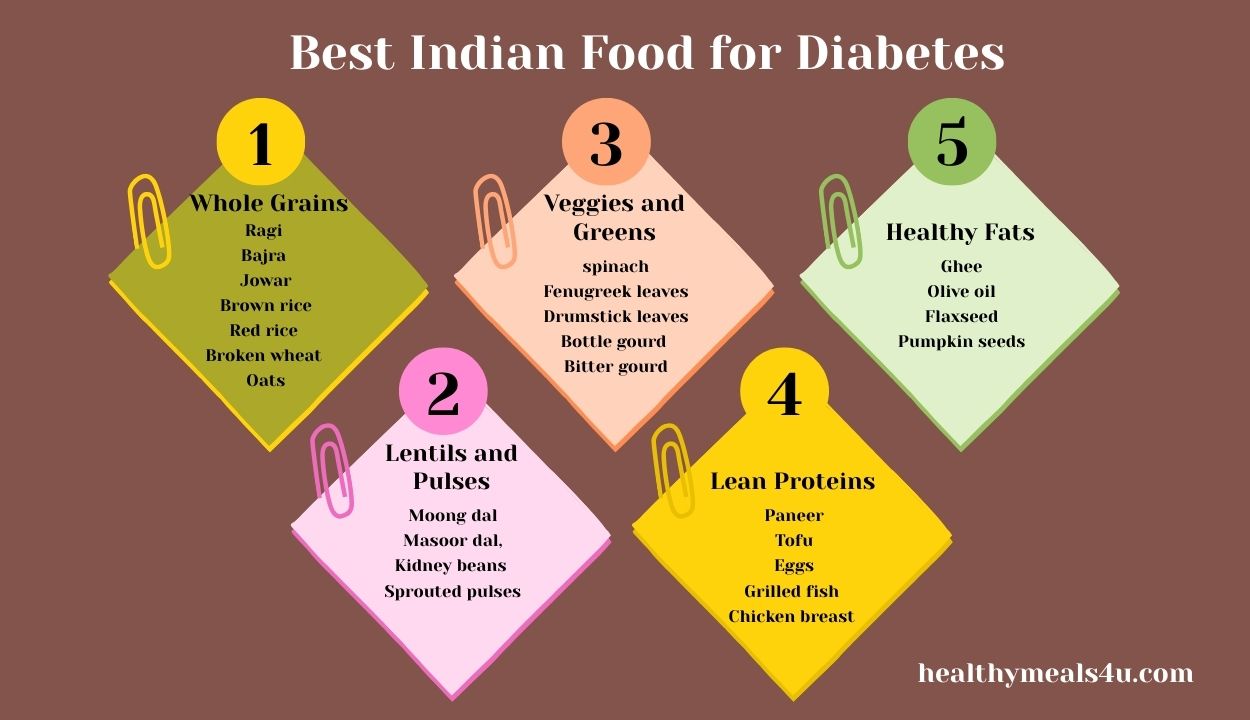
A well-planned diabetic diet comprises complex carbohydrates, lean proteins, and moderate amounts of healthy fats. Let’s see what they are.
1. Whole Grains
- Millets such as ragi, bajra, and jowar take their time to digest — almost like slow-burning fuel. This gentle digestion helps prevent sudden blood sugar jumps.
- Brown rice or red rice is a much better choice than white rice for controlling blood glucose levels.
- Broken wheat (dalia) and oats are high in fibre and help you feel fuller for longer.
2. Lentils and Pulses
- Moong dal, masoor dal, and kidney beans (rajma) are excellent for maintaining steady sugar levels and are the best sources of plant-based protein.
- Sprouted pulses offer even better nutrition. They absorb nutrients efficiently and contain less starch once they sprout — a win-win for diabetics.
3. Veggies and Greens
- Green leafy vegetables like spinach, methi or fenugreek, and drumstick leaves are rich in magnesium and antioxidants. They help to improve insulin function.
- Bottle gourd and bitter gourd are well-known home remedies across India — your grandmother probably mentioned them too. Both help naturally manage sugar levels.
4. Lean Proteins
- Paneer, tofu, eggs, grilled fish or chicken breast are good for tissue repair and prevent post-meal sugar spikes.
5. Healthy Fats
- Cook with olive oil, flaxseed, or a small amount of ghee.
- Add nuts and seeds, such as chia seeds, walnuts, and almonds, to improve heart health and feeling satiated.
Indian Traditional Foods That Help Control Blood Sugar

Indian kitchens are full of natural foods that may help to manage diabetes when used wisely:
- Fenugreek seeds, or methi dana, have been shown in multiple studies to help lower fasting sugar. They improve insulin response — a simple habit with powerful benefits.
- Bitter gourd, or karela, contains compounds that act like insulin in the body.
- Turmeric and cinnamon help your body regulate glucose naturally.
- Amla, or Indian gooseberry, boosts antioxidant levels and supports pancreatic health.
All these ingredients form an integral part of holistic diabetes management when paired with balanced meals and regular physical activities. However, they must be used carefully.
Chromium-Rich Foods for Diabetics
Chromium is a trace mineral essential for helping insulin work more efficiently. According to nutrition experts, it enhances the body’s ability to transport glucose into cells, thus helping to maintain stable blood sugar levels. Deficiency in chromium can make it harder for diabetic patients to manage glucose effectively.
Some of the best chromium rich foods for diabetics include:
- Broccoli, green beans, and tomatoes — excellent vegetable sources of chromium.
- Whole grains like barley and oats.
- Nuts such as almonds and walnuts.
- Egg yolks and lean meats in small portions.
Adding these foods to your diabetic diet, alongside regular physical activities, may improve overall health and insulin sensitivity. Always consult your doctor or a qualified nutritionist before taking chromium supplements — food-based chromium is the safest source.
Indian Diabetic Recipes for Breakfast, Lunch, and Dinner
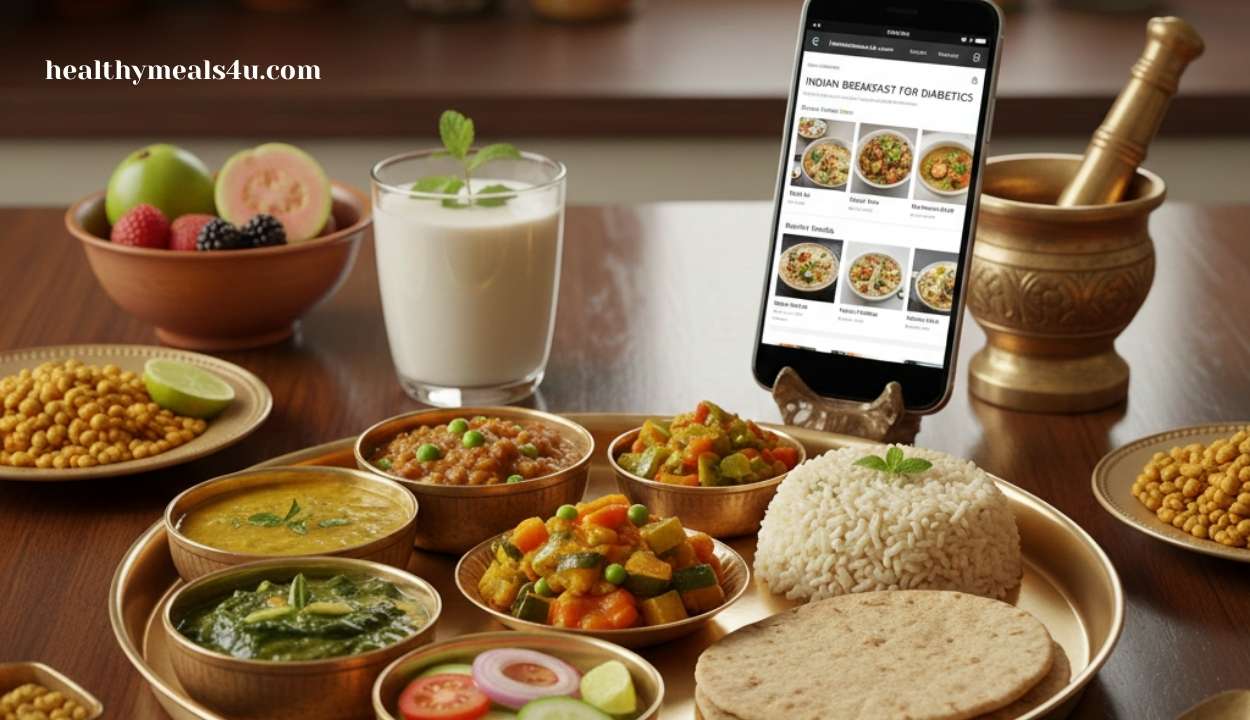
Eating right is about choosing the right mix of ingredients — not bland food. For example, an Indian breakfast for diabetics can include high-protein, fiber-rich options like ragi idli, oats chilla, or vegetable upma made with minimal oil.
At lunch, combine brown rice, dal tadka, and green leafy vegetables for steady energy. Grilled paneer tikka, vegetable soup, or quinoa pulao cooked with olive oil are the best options for diabetic dinner recipes Indian .
Smart snacking can make a big difference in controlling blood sugar levels throughout the day. Instead of reaching for fried or refined-flour snacks, choose nutrient-rich Indian options that combine fibre, protein, and healthy fats. Try roasted chana, moong sprouts chaat, or a small bowl of mixed nuts with fenugreek seeds for a satisfying crunch that won’t spike your blood glucose levels. Salads are another excellent choice — especially when made with green leafy vegetables, kidney beans, and a drizzle of olive oil. Try to include a variety of balanced, tasty diabetic salad recipes in your meals as far as possible. These snacks and salads are not only diabetic-friendly but also support overall health and a healthy lifestyle when paired with regular physical activities.
Weight Management for Diabetics — Gain or Lose Safely
Healthy weight management is a major part of diabetes management. Those looking to build strength can explore weight gain food for diabetics, where healthy calories come from nuts, seeds, and lean proteins — not sugary or refined foods. Doctors recommend combining a nutrient-balanced diabetic diet with physical activities such as walking or yoga.
Goal | Focus Foods | Tip |
Weight Loss | Millets, lentils, green leafy vegetables | Cut down on refined flour and sugary drinks |
Weight Gain | Paneer, nuts, olive oil, eggs | Add calories with healthy fats and proteins |
Stable Weight | Mix of whole grains and protein | Practice portion control and move daily |
Foods to Avoid in a Diabetic Indian Diet
Even traditional diets can become unhealthy if dominated by the wrong foods. Limit:
- White rice and refined flour — they raise blood glucose levels quickly.
- Sweets, sugary drinks, and deep-fried snacks.
- Heavy gravies are cooked in hydrogenated oils.
Replace them with brown rice, grilled dishes, and steamed vegetables for long-term overall health.
A Balanced Indian Diet Can Help Manage Diabetes Naturally
Healthy eating is a lifelong habit, not a restriction. With small tweaks like replacing white rice with brown rice, using olive oil instead of heavy fats, and adding fenugreek seeds or chromium rich foods for diabetics, you can enjoy traditional Indian flavors while keeping blood sugar levels steady.
A doctor-backed diabetic diet, regular physical activities, and consistency are the best ways to live a truly healthy lifestyle.
FAQ
Can diabetics eat rice in India?
Yes, but choose brown rice or red rice, and pair it with dal or vegetables for slower glucose release.
Is idli or dosa good for diabetics?
Yes, when made from ragi, oats, or millet instead of plain white rice.
Which Indian vegetables are best for controlling blood sugar?
Green leafy vegetables, bitter gourd, drumstick leaves, and bottle gourd
Can diabetics drink fruit juice?
Prefer whole fruits. If needed, opt for amla or cucumber juice in small amounts.
Do chromium rich foods really help manage diabetes?
Yes, research supports that chromium rich foods for diabetics can improve how the body uses insulin. However, always consult your doctor before supplementation.
One Response